

Mezzanine loans typically carry a coupon of 10% to 13%, and in rare cases 15% to 18%, paid in cash or a mix of cash and payment-in-kind (PIK) interest, according to a Meketa Investment Group white paper from October 2018. The coupon is only part of the price. Upfront fees and an equity warrant raise the total cost, so the number to compare is the all-in return the lender expects, not the headline rate.
This guide shows how to read a mezzanine term sheet, what moves the rate, how warrants work, and when a lower-cost structure such as an SBA 504 loan can do the same job for owner-occupied real estate or equipment.
Cdcnewengland
Consider SBA 504 for Property or Equipment
Compare mezzanine financing with SBA 504 loans for commercial real estate or equipment, with competitive fixed rates for up to 25 years.
TL;DR
Table of Contents
What mezzanine interest rates look like
Mezzanine debt sits between senior bank debt and owner equity. Because it ranks behind the senior lender, it is priced higher than a first-position loan.
The published ranges vary by source and by deal type. Here is what the checked U.S. sources say:
SourceCoupon or rate rangeOther cost elements Meketa, October 2018 10% to 13% typical, 15% to 18% in rare casesEquity features such as options and warrants typically make up 15% to 25% of total return Duane Morris LLP, Winter 2013 11% to 14%Upfront fees of up to 2% of principal, plus a warrant
You will see wider ranges, such as 12% to 20%, in lender marketing and online guides. Those figures often fold in the equity component or describe riskier situations. Treat any single number as a starting point for a conversation, not a quote.
Mezzanine coupons are also generally fixed rather than floating. That makes them easier to budget, and it is worth understanding how the same choice plays out elsewhere in your capital stack. This breakdown of fixed versus floating rates for commercial real estate shows the tradeoff on the senior side.

Cash interest, PIK interest and fees
A mezzanine rate often has two parts.
Duane Morris describes a typical structure as a five-year, interest-only loan with principal due at maturity, at 11% to 14% total, where 10% to 12% is paid in cash each month and the balance is PIK. Lenders also commonly take board observation rights, and sometimes a board seat.
A worked example
Suppose you borrow $2,000,000 in mezzanine capital at 12% total, split into 10% cash and 2% PIK, with a 2% upfront fee.
That is why the useful comparison is total cost over the life of the loan, not the monthly payment. Your free cash flow during the term is protected by the PIK portion, but the payoff at the end is larger.
Why mezzanine costs more than senior debt
The Meketa paper explains the pricing logic. Mezzanine is typically unsecured and junior to first lien, second lien and unitranche debt. It carries a fixed coupon over a longer contractual period, and the lender asks for an equity portion to share in the upside. Those features carry more risk for the lender, and the rate reflects it.
In a liquidation, senior lenders are repaid first, then mezzanine lenders have a claim on what remains, then equity holders. Meketa cites corporate recovery data of about 80% for top-of-structure loans against 28% for the bottom position. A lender who accepts that position needs a return that compensates for it.
For you, that translates into four levers that move your rate:
We cover the broader pricing picture in our guides on what mezzanine financing costs and when it works and mezzanine versus senior debt. If you are weighing it against another layered structure, the comparison of unitranche and mezzanine debt lays out how PIK and triggers differ.
Mezzanine warrants explained
A warrant is a right to buy a small amount of your company’s equity at a set price, usually exercisable in the future. Think of it as the lender’s share in growth. Duane Morris explains that mezzanine lenders sit below senior debt and want to take part in the upside that equity owners enjoy. They hope to earn through current interest, warrant exercise, or a sale or repurchase of the underlying equity.
A few practical points help you evaluate one:
Because the warrant is part of the lender’s return, compare offers on total yield: coupon plus fees plus the estimated value of the equity.
When mezzanine makes sense
Duane Morris advises that mezzanine is a good option for funding a growth project with a fairly certain payout within a predictable time frame, or for taking some money off the table. It is generally not the better option if you want to sell the whole business or if the company needs rescue capital, since the lender needs to generate distributions for its own investors.
In practice, mezzanine tends to fit when:
If you are a New England business owner buying the building you operate from, or equipment you will use, there is often a structure designed for exactly that. The next section compares it.
Mezzanine versus an SBA 504 loan
For owner-occupied commercial real estate and long-lived equipment, an SBA 504 loan is built to deliver long-term, fixed-rate financing with a low down payment. Our SBA 504 structure requires only 10% down, with competitive fixed rates for up to 25 years, which keeps more working capital in your business.
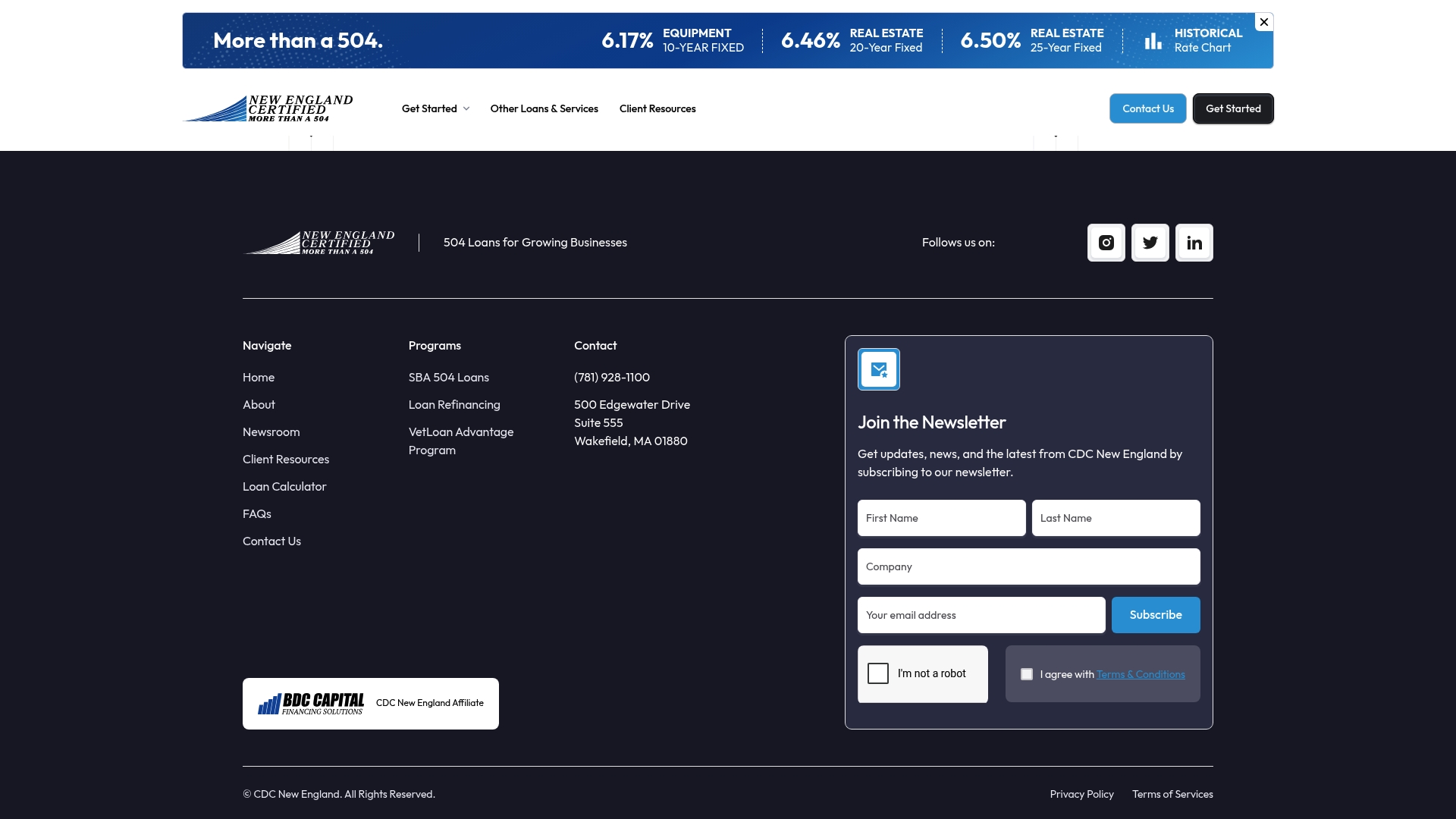
Here are the rates we published on our site as of September 2026:
ProgramPublished rateEquipment 10-Year Fixed6.58%Real Estate 20-Year Fixed6.73%Real Estate 25-Year Fixed6.77%
These rates change as market conditions change, so confirm the current figure with us before you plan around it. Set beside a mezzanine coupon of 10% to 13% with warrants, the difference on a multi-million-dollar real estate purchase is large. On a $2,000,000 balance, each percentage point of interest is $20,000 a year.
The two are not mutually exclusive. Many deals use senior financing, an SBA 504 structure and, where a project needs it, additional capital. Our comparison of SBA 504 and CMBS loans and our guide to choosing fixed or variable rates can help you frame the choice. If you already carry expensive debt on a property, our SBA 504 refinance program is designed to restructure it.

How to compare mezzanine offers
Use this routine when you receive two or three term sheets:
Then compare the result with lower-cost long-term options for the part of the project that qualifies, such as the real estate or equipment purchase.
Our perspective
Business owners often ask us about mezzanine rates because a project has a funding gap and they want to know what it will cost. The honest answer is that the price depends on the structure: coupon, PIK, fees and warrants all count.
What we have seen across New England is that owners get the best result when they match each piece of the project to the right kind of capital. Long-lived assets like a building or equipment are suited to long-term, fixed-rate financing with a low down payment. That is why we built our work around SBA 504 loans, with 10% down and fixed rates for up to 25 years, backed by more than 70 years of experience and more than $2.3 billion invested in regional businesses.
We also offer mezzanine financing and asset-based lines of credit for New England businesses, so you can talk through the whole capital structure with one regional team instead of assembling it piece by piece. Our aim is that every dollar of your project is financed at a cost your cash flow can carry.
PHENYX
Talk to us about your project
If you are planning to buy commercial real estate or equipment, or to refinance existing debt, we can help you build a structure around a 10% down payment and fixed rates for up to 25 years. Veterans and spouses can ask about our VetLoan Advantage Program, which lists a 1.0% processing fee, and buyers who need help with the equity portion can look at our Down Payment Assistance Program.
See current programs and rates on our home page, then tell us about your project and we will walk you through the options.
FAQ
What is the typical interest rate for mezzanine loans?
Meketa’s 2018 white paper describes a typical coupon of 10% to 13%, with rare cases at 15% to 18%. Duane Morris describes 11% to 14% for a common five-year structure. Fees and warrants add to the total cost.
What is PIK interest in a mezzanine loan?
PIK means payment in kind. Instead of paying that part of the interest in cash, it is added to the loan balance and repaid at maturity. It eases monthly cash flow but raises the amount you owe at the end of the term.
Why do mezzanine lenders ask for warrants?
Mezzanine sits behind senior debt, so lenders want a share of the upside as part of their return. Duane Morris explains that they hope to earn through interest, warrant exercise or the sale or repurchase of the equity. A warrant can also allow a lower cash coupon.
When should I use mezzanine instead of a bank or SBA loan?
It suits growth projects with a fairly certain payout in a predictable time frame. For buying the building or equipment you operate from, an SBA 504 loan with 10% down and fixed rates for up to 25 years is designed for that purpose, and it can sit alongside other capital for the rest of the project.


