An SBA 504 debenture is the pooled, SBA-guaranteed security that funds the SBA-backed portion of your 504 loan, typically a large portion of your project cost. The U.S. Small Business Administration guarantees it, a Certified Development Company issues it, and investors buy it on a monthly cycle. Your loan doesn’t fully fund until that debenture sells, which is why rates lock at sale, not at closing.
TL;DR:
- The debenture sale is scheduled on specific SBA funding cycles, and closing even a week early can add a month of interim interest costs.
- Debenture rates vary monthly based on Treasury benchmarks and investor demand, with standard terms of 10, 20, or 25 years; current rates are trackable online.
- Proper completion of SBA Form 1504 and coordination with the CDC and senior lender are crucial to avoid delays in funding.
- Borrowers should gather required documents early and align closing dates with funding cycles to minimize interim financing costs.
- A fixed-rate 504 loan can be locked for up to 25 years, with some programs offering down payment assistance and tailored options for veteran-owned businesses.
Table of Contents
- What Is an SBA 504 Debenture: Legal and Financial Definition
- How a Debenture Actually Funds Your 504 Loan
- Debenture Rates and Rate History: Where the Numbers Come From
- Legal and Administrative Obligations Tied to Your Debenture
- Managing a Debenture-Purchased 504 Loan After Closing
- Practical Checklist Before You Close on a 504 Debenture
- How Cdcnewengland Helps Borrowers Navigate the Debenture Process
- Get Started With a Fixed-Rate 504 Loan Built Around Your Timeline
- Where to Verify Debenture Rules and Rates Yourself
- Sources
What Is an SBA 504 Debenture: Legal and Financial Definition
The SBA calls it a “debenture” for a reason rooted in how the money actually moves. Rather than a bank lending its own deposits, a Certified Development Company (CDC) originates the SBA-backed portion of your loan, then pools it with other 504 loans nationwide into a single debenture. That debenture gets sold to institutional investors, and the sale proceeds fund your project.
The U.S. Small Business Administration guarantees the debenture, which is what lets investors accept a fixed rate well below what unsecured corporate debt would command. Collateral backing the loan, your building or equipment, sits behind the guarantee as a second layer of security.
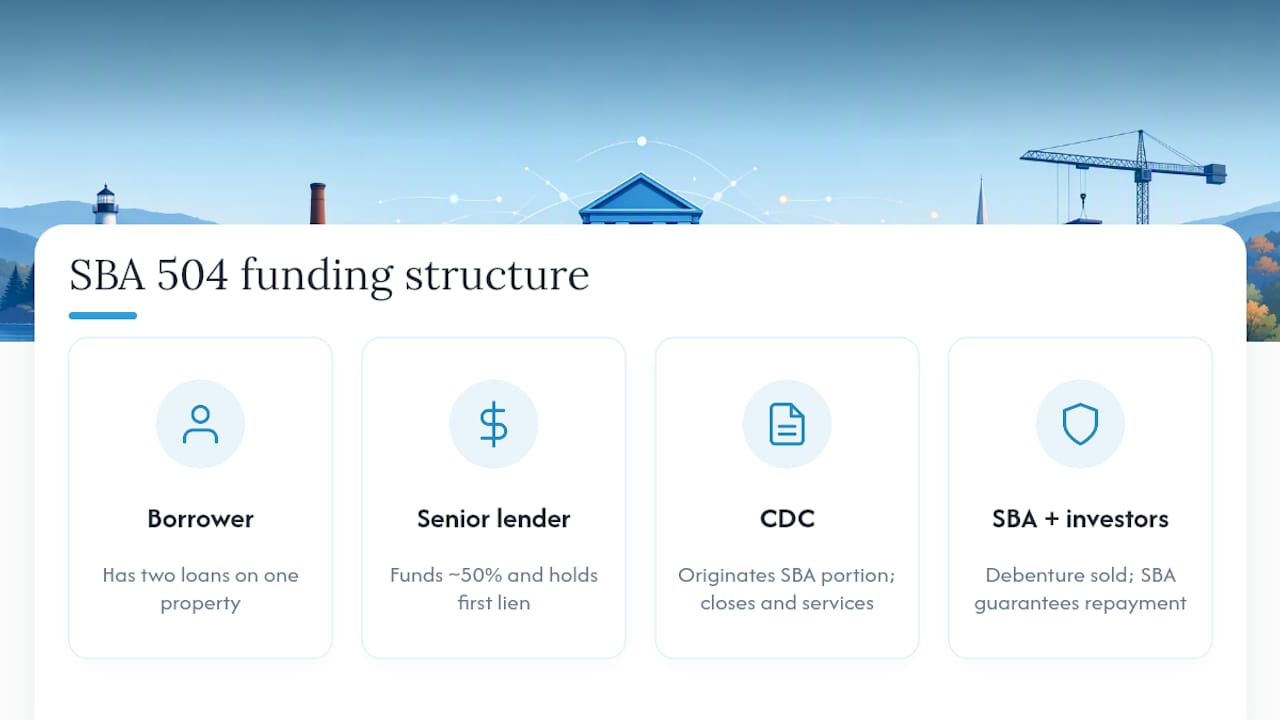
Three parties carry distinct responsibilities in this structure. Your senior lender (usually a bank) funds roughly half the project and takes a first lien position. The CDC underwrites, closes, and services the SBA portion. The SBA guarantees repayment to the investor pool that ultimately owns the debenture. You, the borrower, end up with two loans stacked on one property: a conventional first mortgage and a fixed-rate second backed by the debenture.
How a Debenture Actually Funds Your 504 Loan
Funding a 504 loan happens in a specific order, and knowing that order helps you plan cash flow instead of guessing at it.
- Your senior lender funds a significant portion of the project cost at closing, secured by a first lien.
- The CDC provides interim financing, a substantial portion of the project cost, to cover the SBA portion while your debenture waits for its scheduled sale date.
- The debenture sells to investors on the next available funding cycle, and the sale proceeds pay off the CDC’s interim loan.
That middle step is where borrowers get surprised. Interim financing isn’t free. You’ll pay interest on that bridge amount for however many weeks or months separate your closing from the next debenture sale, and closing timing relative to the funding schedule determines how long that exposure lasts. The SBA publishes its debenture funding schedule for each calendar year, and it governs the monthly cycle your debenture rides.
Pro Tip: Ask your CDC loan officer for the next two funding cycle dates before you set your closing date. Closing even a week before a cycle cutoff can add a full month of interim interest to your project cost.
Debenture Rates and Rate History: Where the Numbers Come From
504 debenture rates aren’t set by your CDC or your bank. They’re set at the moment each pooled debenture sells to investors, based on prevailing market conditions for government-guaranteed paper that month.
Rates get published monthly and typically come in three term options:
- 10-year debentures, generally used for equipment financing.
- 20-year debentures, the standard term for most owner-occupied real estate projects.
- 25-year debentures, available for qualifying real estate deals needing a longer amortization schedule.
Rates for standard projects and manufacturing-designated projects can differ slightly, since manufacturing loans sometimes carry adjusted fee structures under SBA rules.
Debenture rates change month to month based on Treasury benchmarks and investor demand for that funding cycle’s pool, which means the rate your loan locks depends heavily on which month your debenture sells.
If you want current numbers rather than estimates, SBA Pulse publishes current and historical 504 debenture rates across all three terms, and CDC New England maintains its own historical rate trends chart so you can see how today’s environment compares to prior cycles. For a plain breakdown of what actually lands on your monthly bill, this explainer on 504 loan rates walks through the fee layers that sit on top of the base debenture rate.
Legal and Administrative Obligations Tied to Your Debenture
Every debenture sale runs through specific SBA paperwork, and skipping a step here is the single most common cause of funding delays.
- SBA Form 1504, the Development Company 504 Debenture, is the document your CDC must complete for each debenture sold to fund your loan. Errors or missing details on this form push your debenture to the next funding cycle.
- Form 1244, the application package, spells out the exhibits you and your CDC need to complete and upload for review.
- Eligibility rules require your business to operate for profit inside the United States and meet SBA size standards, generally under certain tangible net worth and average net income limits over prior years.
- Any owner holding 20% or more equity must sign an unlimited personal guarantee.
Disclosure obligations continue after approval. Ownership changes, licensing updates, and financial statement submissions typically route through your CDC or the SBA’s electronic systems rather than a paper file.
Managing a Debenture-Purchased 504 Loan After Closing
Once your debenture sells, your CDC or its designated servicer handles day-to-day loan administration, while the investor pool that purchased the debenture holds the actual asset.
- Create an account in the SBA Loan Portal to monitor your loan status and make payments directly.
- Confirm which entity, your CDC or a third-party servicer, collects your monthly payment before your first due date.
- If servicing transfers to a new servicer, you’ll receive written notice with updated payment instructions. Keep that notice on file.
Practical Checklist Before You Close on a 504 Debenture
A little preparation upfront saves real money once interim financing starts accruing interest.
- Gather financial statements, ownership disclosures, and business licenses early so your CDC can complete Form 1244 without delays.
- Ask your CDC for an itemized estimate of fees, including CDC processing fees and projected interim interest, before you sign a purchase agreement.
- Coordinate your closing date with your senior lender and CDC so it lands close to a debenture funding cycle date, not weeks ahead of it.
- Double check ownership percentages and guarantee paperwork before submission. Mismatched ownership disclosures are a frequent cause of Form 1504 rejections.
Pro Tip: If your CDC holds ALP Express or PCLP authority, ask about it directly. Those designations can shorten certain underwriting steps and reduce how long your interim loan sits outstanding.
How Cdcnewengland Helps Borrowers Navigate the Debenture Process
Some Certified Development Companies have extensive experience financing New England businesses and investing billions into regional projects, so many borrowers underestimate interim costs or miss a funding cycle by days. Our 504 loan calculator and rate charts let you model scenarios before you commit to a closing date. Veterans and buyers needing down payment help get dedicated program paths. Talk to a Cdcnewengland loan officer for a project estimate before you lock a closing date.
Get Started With a Fixed-Rate 504 Loan Built Around Your Timeline
Cdcnewengland turns the confusion around debenture funding cycles into a straightforward process, with a 10% down payment requirement and fixed rates locked for up to 25 years, so you’re not left guessing when interim interest stops and your permanent rate starts. Whether you’re buying commercial real estate, upgrading equipment, or refinancing existing debt, our team coordinates directly with your senior lender to time your closing against the SBA’s funding schedule and keep interim costs low.
There are dedicated programs available for veteran-owned businesses and buyers who need down payment assistance to help ensure financing gaps don’t stall qualifying projects. Run your numbers through our SBA 504 loan calculator to see what a fixed-rate debenture loan looks like for your project, then visit our SBA 504 loans page to request a project estimate from a Cdcnewengland loan officer.
Where to Verify Debenture Rules and Rates Yourself
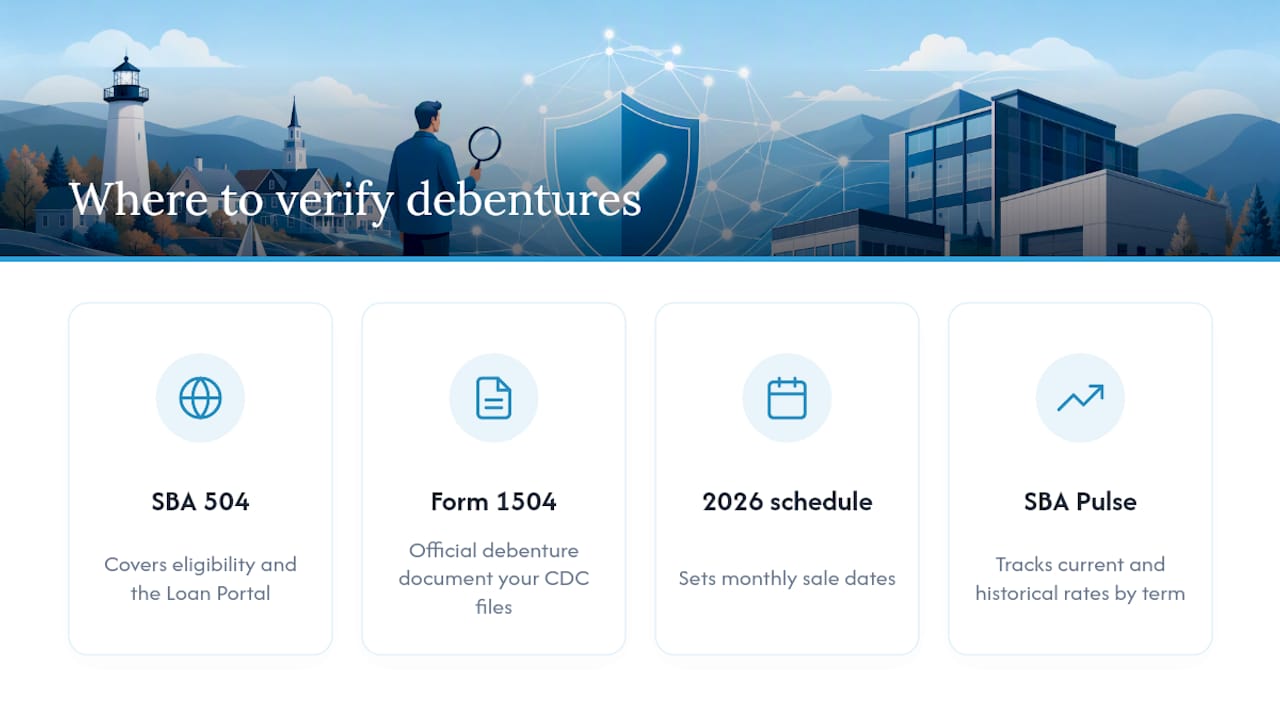
Confirm anything in this article against primary sources before you close. The SBA’s 504 loan program page covers eligibility and the Loan Portal. Form 1504 is the official debenture document your CDC files. The 2026 funding schedule sets monthly sale dates, and SBA Pulse tracks current and historical rates by term.
This article is general information, not a substitute for advice from a qualified financial advisor. Consult a qualified financial professional about your own circumstances before acting on anything here.
Sources
Recommended
- Securing Fixed-Rate Financing in a Volatile Market
- What Can You Finance with an SBA 504 Loan? A Complete Guide for New England Businesses
- SBA 504 Loan Appraisal Requirements: What New England Business Owners Need to Know
- SBA 504 Loan Program Explained: How Small Businesses Can Buy Commercial Real Estate With Just 10% Down