

An appraisal becomes mandatory for an SBA 504 loan once the estimated value of your project property exceeds $500,000, though several exceptions can trigger one below that threshold too. Your first move should be confirming appraisal requirements directly with your lender or CDC and budgeting for a USPAP-compliant appraisal if your deal falls into a triggering category.
TL;DR:
- Appraisals are mandatory for SBA 504 loans when the property value exceeds $500,000 and may be required below that threshold in certain high-risk cases.
- A full USPAP-compliant appraisal is required for values above $500,000, while lighter evaluations may suffice under specific conditions such as related-party transactions or land held over two years.
- Appraisals must meet strict standards, be independent, and comply with USPAP, with costs varying based on property type and complexity, and generally need to be ordered early.
- For properties under construction or requiring substantial renovation, appraisals must estimate value as completed, and timing is critical to avoid delays.
- Supporting documentation like purchase agreements, tax returns, financial statements, and site plans should be prepared in advance to prevent delays and facilitate accurate appraisal processing.
Table of Contents
- When does SBA require a full appraisal versus an evaluation?
- What standards must the appraisal meet?
- How long is an appraisal valid, and what if the property isn’t finished yet?
- When do equipment and fixed assets need their own appraisal?
- What are the rules for a recent change of business ownership?
- What documents should you have ready to avoid appraisal delays?
- What if the appraised value comes in lower than expected?
- Our perspective on keeping SBA 504 appraisals from derailing your closing
- How CDC New England supports your SBA 504 financing
- FAQ
- Sources
When does SBA require a full appraisal versus an evaluation?
The $500,000 threshold did not appear by accident. It tracks the broader appraisal threshold federal banking regulators set for real estate transactions, and the SBA aligned its 504 rules to match. When your project property’s estimated value comes in above $500,000, a full appraisal is required, no exceptions. At or below that figure, the rules get more nuanced.
For deals at or under $500,000, the CDC still must obtain a full appraisal in several specific circumstances rather than defaulting to a lighter-touch review. These situations exist because they carry elevated risk of inflated valuation or conflicts of interest:
- The borrower is contributing land owned for two or more years as equity in the project.
- The property is other real estate owned (OREO) by a lender or CDC.
- The transaction involves related parties, such as a sale between family members or affiliated businesses.
- The seller is carrying back part of the financing through a note.
- The lender, CDC, or SBA determines an appraisal is necessary given the facts of the deal, even outside these categories.
Outside those triggers, your CDC can rely on an “appropriate evaluation” instead of a full USPAP appraisal. An evaluation is a lighter valuation method, often based on comparable sales data, tax assessments, or a desktop review rather than a full on-site appraisal with a licensed appraiser’s opinion of value. It still needs to support the project’s value, but it costs less and moves faster. If your deal is borderline on the $500,000 mark or touches any of the exception categories above, ask your lender early which path applies so you can budget time and money accordingly.
What standards must the appraisal meet?
Once an appraisal is triggered, it has to satisfy specific technical and procedural rules, not just reflect a qualified opinion of value. The SBA requires that the appraisal be delivered as an “Appraisal Report” prepared in compliance with the Uniform Standards of Professional Appraisal Practice, commonly known as USPAP. That compliance isn’t optional paperwork. It governs how the appraiser gathers data, documents assumptions, and supports the final value conclusion.
Appraiser independence matters just as much as the report format. The appraisal must identify your lender as the client and intended user, and an appraisal originally prepared for the seller or for you as the applicant cannot be recycled into the loan file. The lender has to commission its own appraisal, or at minimum be named as the client on the engagement.
A few practical points worth knowing before you start:
- Federally regulated lenders, meaning banks and credit unions supervised by federal regulators, may also apply FIRREA requirements on top of SBA rules, which can mean stricter appraiser licensing standards.
- You, as the borrower, typically pay the appraisal fee even though the lender orders the report and controls the process.
- Appraisal costs vary by property type and complexity, so ask your lender for a specific quote rather than assuming a flat rate.
Pro Tip: Ask your lender upfront whether they’re a federally regulated institution, since that can add appraisal requirements you’ll want to plan for before signing a purchase contract.
How long is an appraisal valid, and what if the property isn’t finished yet?
Timing rules catch a lot of borrowers off guard, especially when construction schedules shift. An appraisal cannot be older than 12 months at the time of application. If your lender plans to require a fresh appraisal at closing instead, perhaps because the property is still under construction, your application must include an estimate of value, and the loan file needs to clearly document that requirement.
New construction or substantial renovation projects add another wrinkle. Substantial renovation means rehab costs exceeding one-third of the purchase price or fair market value. When that threshold is crossed, the appraisal must estimate market value as-complete, meaning what the property will be worth once construction or renovation finishes, not what it’s worth in its current half-built state.
Here’s the general sequence that keeps as-complete appraisals and construction timelines aligned:
- Lock in final construction specs and site plans before ordering the appraisal, since the appraiser needs finished plans to estimate completed value accurately.
- Order the as-complete appraisal early in underwriting so the lender has a supportable value before closing.
- Complete construction according to the approved plans, keeping documentation of any changes along the way.
- After construction wraps, obtain a statement from the appraiser, contractor, or architect verifying the building was completed with only minor deviations from the original plans.
- If deviations were significant, expect the lender to order a new appraisal confirming the finished value still meets or exceeds the original estimate, and to notify the SBA of the change.
Skipping that post-construction verification step is one of the more common reasons closings stall near the finish line.
When do equipment and fixed assets need their own appraisal?
Real estate isn’t the only asset category where appraisal rules apply. If you’re claiming equipment or other fixed assets at a value higher than their net book value, meaning the depreciated value on your financial statements, an independent appraisal becomes necessary to support that higher figure.

This distinction matters because net book value reflects accounting depreciation schedules, not market reality. A piece of specialized manufacturing equipment might be fully depreciated on paper while still holding real resale value, and lenders need an independent opinion to bridge that gap safely.
A few clarifications worth keeping straight:
- A business valuation, which assesses the company as a going concern including goodwill and cash flow, is a different exercise from an individual equipment appraisal, which values a specific asset on its own.
- Equipment appraisers should carry relevant credentials for the asset class, whether that’s industrial machinery, medical equipment, or specialized tooling.
- The same independence principle that applies to real estate appraisals applies here: the appraiser works for the lender’s benefit, not the seller’s or your own.
If your deal includes equipment valued above book value, flag it with your lender early so the appraisal order can be scheduled alongside the real estate appraisal rather than added as a late surprise.
What are the rules for a recent change of business ownership?
Buying a business that changed hands within the last 36 months brings extra scrutiny, and for good reason. Recent ownership changes can mask inflated valuations, especially when the seller and buyer have any prior relationship. The SBA requires an appraisal of the business real estate in these cases, plus one of two additional safeguards: either a review of that appraisal by a second appraiser selected directly by the lender, or a documented site visit conducted by a senior member of the lender’s staff.
Business valuation adds another layer entirely separate from the real estate appraisal. Whether the transaction is structured as an asset purchase or a stock purchase changes what gets valued and how, so your valuation source needs to match the deal structure and carry appropriate signatures tying the report to a qualified preparer.
Expect your lender’s file to include:
- The real estate appraisal itself, meeting the same USPAP and independence standards covered earlier.
- Either the second appraiser’s review notes or a dated, documented site visit report.
- A business valuation report specific to the purchase structure, asset or stock, with the preparer’s qualifications on record.
Pro Tip: If you’re buying a business that changed hands recently, ask the seller for ownership transfer dates as early as possible so your lender can plan which safeguard, review or site visit, fits the timeline best.
What documents should you have ready to avoid appraisal delays?
Appraisal delays rarely come from the appraisal itself. They come from missing paperwork that stalls the appraiser’s ability to start, or from lenders discovering gaps after the order’s already been placed. Getting your documentation together before you request an appraisal saves weeks.
Prioritize gathering these items early:
- A signed purchase contract establishing the agreed price and terms.
- Site plans and, for construction or renovation projects, detailed construction specifications.
- Two to three years of business and personal tax returns.
- Current financial statements, including a recent balance sheet and profit and loss statement.
- Equipment schedules if fixed assets are part of the financed package.
- Title documentation and any available environmental reports.
- Proof of land ownership duration if you’re contributing land held for two or more years as equity.
Coordinate the appraisal order with your lender or CDC rather than requesting one independently. Ordering through the lender avoids duplicate fees and ensures the report names the right client, since an appraisal commissioned by you as the borrower may not satisfy the independence rule covered earlier.
On timing, appraisal lead times generally run a few weeks depending on property complexity and appraiser availability, and that window needs to fit inside the broader 60 to 90 day timeframe typical of a full CDC loan process. The most common failure modes we see are appraisals ordered too late in the process, construction specs that change after the appraisal is already underway, and missing tax returns or financials that stall the lender’s ability to even request the appraisal.
What if the appraised value comes in lower than expected?
A low appraisal doesn’t automatically kill a deal, but it does trigger specific documentation rules.
That justification needs to explain why the lower value doesn’t undermine the loan’s soundness, often tied to additional collateral or equity.
Practical remedies borrowers use when values come in low include:
- Adding equity to close the gap between appraised value and loan amount.
- Pledging additional collateral, with both fair market value and liquidation value documented.
- Renegotiating the purchase price downward to match the appraisal.
- Ordering a new appraisal after completing repairs or improvements that justify a higher value.
Expect this process to add one to two weeks to your timeline while your lender documents the remedy and, if needed, secures SBA approval.
Our perspective on keeping SBA 504 appraisals from derailing your closing
Appraisal rules read like a maze until you’ve walked a borrower through the process a few times. Most of the friction we see doesn’t come from the appraisal standards themselves. It comes from borrowers discovering mid-process that their deal falls into one of the exception categories, or that construction specs changed after the appraisal was already ordered.
Our approach leans on checklists built around the exact SBA triggers covered above: the $500,000 threshold, the exception categories, and the 36-month ownership lookback. We walk borrowers through document gathering before the appraisal order goes out, not after, which is the single biggest lever for avoiding delays. For veteran-owned businesses and borrowers facing higher equity demands after a valuation adjustment, down payment assistance and specialized programs exist specifically to give you options when the numbers don’t line up perfectly on the first pass.
If you’re early in planning a 504 transaction, reach out before you sign a purchase contract. A quick conversation about appraisal timing can save weeks later.
— PHENYX
How CDC New England supports your SBA 504 financing
Getting the appraisal right is one piece of a larger financing puzzle, and we built our product lineup to match the practical pressures borrowers face once a valuation lands. 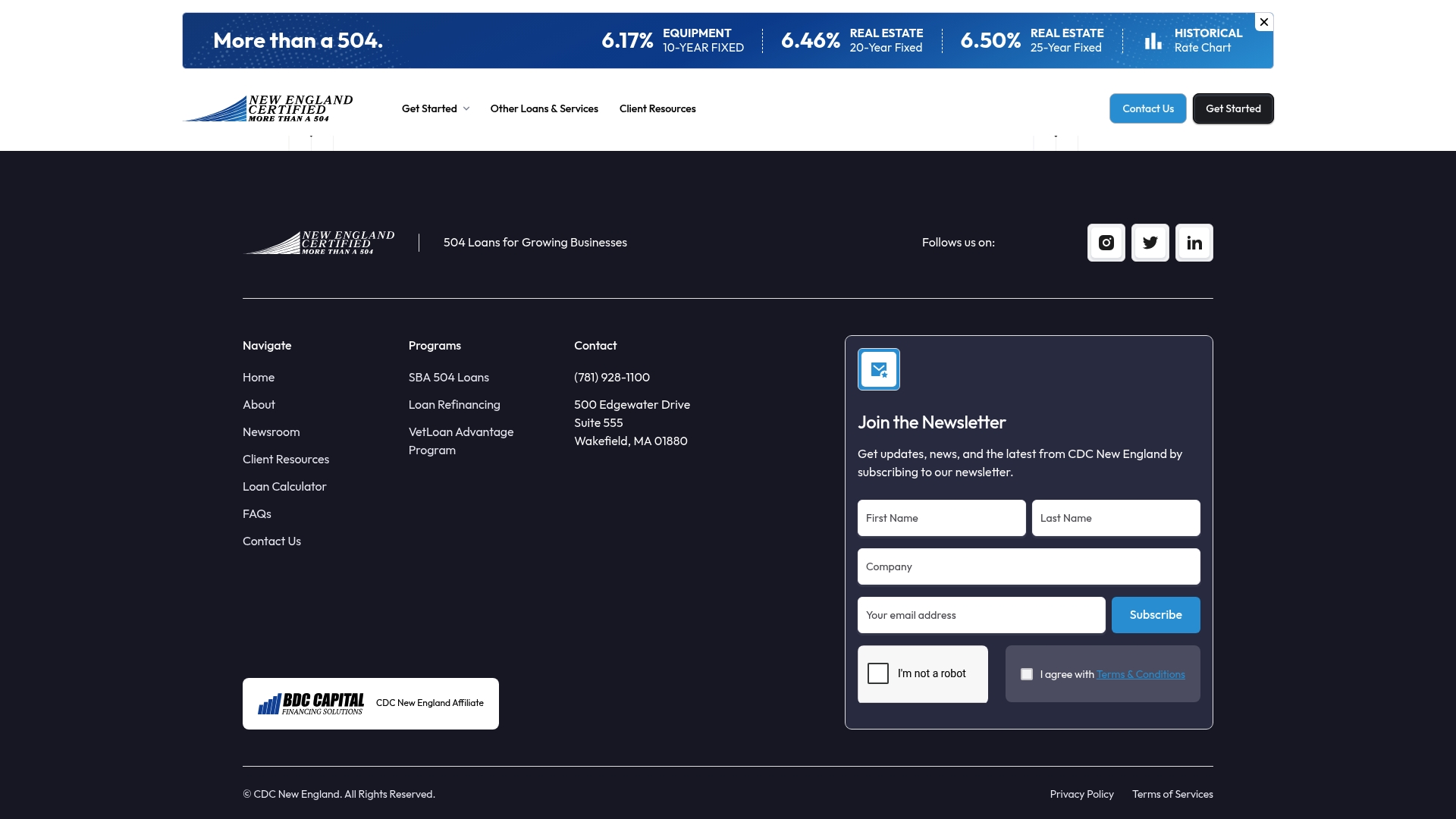
Our current offerings include:
- Equipment 10-Year Fixed and Real Estate 20-Year Fixed or 25-Year Fixed loans for commercial property and equipment purchases, structured around the fixed-rate terms detailed on our main loan products page.
- The SBA 504 Refinance Program, built for businesses looking to restructure existing commercial debt, outlined on our refinance program page.
- The VetLoan Advantage Program, offering tailored terms for veterans and their spouses, with processing fee details on our VetLoan Advantage page.
- Down payment assistance, designed for borrowers who need help bridging an equity gap, especially one that surfaces after a low appraisal, described on our down payment assistance page.
If you’re preparing a purchase contract or already waiting on an appraisal, contact our team for a pre-application checklist review. We’ll walk through your documentation and flag any appraisal triggers before they slow down your closing.
This article is general information, not a substitute for advice from a qualified financial advisor. Consult a qualified financial professional about your own circumstances before acting on anything here.
FAQ
What are the requirements for an SBA 504 loan?
SBA 504 loans require you to occupy at least 51% of an occupied building or 60% of new construction, along with standard eligibility factors like business size, net worth limits, and use of funds tied to fixed assets. You’ll also need to meet documentation requirements, including tax returns, financial statements, and a signed purchase contract, and an appraisal if your project property’s value exceeds the $500,000 threshold.
What is the 20% rule for SBA?
The exact split depends on your project type and business history, so confirm specifics with your lender.
What are the collateral requirements for an SBA 504 loan?
Collateral for a 504 loan is generally the asset being financed, meaning the commercial real estate or equipment itself secures the loan. If an appraisal comes in low, lenders may ask for additional collateral, documented with both fair market value and liquidation value, to support the loan amount.
How much does the SBA guarantee on a 504 loan?
The SBA guarantees the CDC debenture portion of a 504 loan structure, which generally makes up around 40% of total project costs, though the exact percentage varies by project.
Do I need an appraisal if my project is under $500,000?
Not always. Below the $500,000 threshold, your CDC can often use an appropriate evaluation instead of a full appraisal, unless your deal falls into an exception category like related-party transactions, seller carrybacks, or contributed land equity held two or more years.


