

The SBA 504 application centers on one document, SBA Form 1244, and you cannot file it alone. You’ll need a Certified Development Company (CDC) to package your exhibits and upload the completed file to SBA E-Tran. Before you contact a CDC, start gathering your highest-priority exhibits: SBA Form 413, two to three years of tax returns, a property appraisal and an environmental report.
TL;DR:
- Most delays occur from vendor-driven exhibits like appraisals and environmental reports ordered late in the process.
- Missing or outdated forms, especially Form 413 from key owners, cause frequent application rejections.
- A complete file with early-ordered appraisal and environmental report can shorten review time to weeks, but incomplete documents add months.
- Businesses must meet strict occupancy, net worth, and income criteria; all owners with over 20% equity must submit Form 413.
- Working with an experienced CDC that guides through modeling and documentation streamlines the application, reducing the risk of delays.
Table of Contents
- What Is SBA Form 1244 and How Is the Application Package Organized?
- Who You Must Work With: CDCs and the Senior Lender
- Do You Qualify? An Eligibility Checklist
- Documents and Exhibits to Gather Before You Start
- The Application Workflow: From Pre-Qualification to Closing
- Refinancing With a 504 Loan: Special Rules to Know
- Common Pitfalls That Delay or Sink an Application
- How Cdcnewengland Approaches SBA 504 Applications
- Ready to Start Your SBA 504 Application?
- Sources
- FAQ
What Is SBA Form 1244 and How Is the Application Package Organized?
Form 1244 is the application itself, and it comes in two parts. Section One covers the borrower’s identifying information, project description, and use of proceeds, and you and your CDC complete it together. Section Two contains the certifications: statements about compliance, size standards, and legal eligibility that you sign under penalty of false statement liability. Read every certification before signing. It also carries an OMB control number and expiration date, a reminder that this is a federally regulated form, not a lender’s internal application.
Attached to Form 1244 is an exhibits list, and the form specifies which exhibits get uploaded to E-Tran versus kept in your CDC’s file. Common exhibits include:
- Exhibit 1: credit memorandum, prepared by the CDC or lender
- Exhibit 2: loan authorization
- Exhibit 3: SBA Form 413, personal financial statement
- Exhibit 5: business balance sheet
- Exhibit 6: projected income statement
- Exhibit 8: collateral schedule
Missing signatures or an outdated exhibit are among the most common reasons a package bounces back for correction.
Who You Must Work With: CDCs and the Senior Lender
You cannot submit a 504 application directly to the SBA. 504 loans are available exclusively through Certified Development Companies, nonprofit organizations certified by the SBA to package, underwrite, and service the government-guaranteed portion of your loan. The CDC works alongside a senior lender, usually a bank or credit union, in a two-part structure: the senior lender typically finances around half the project, the CDC finances a smaller share backed by an SBA-guaranteed debenture, and you cover the rest with your down payment.
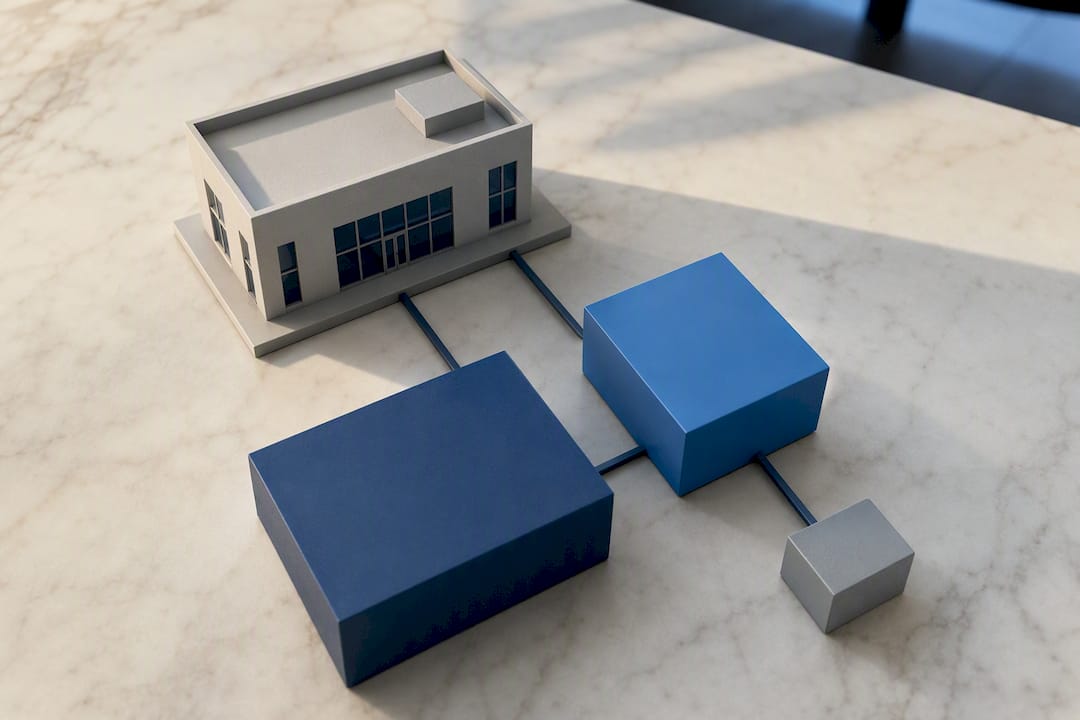
Each party underwrites its own piece. The bank evaluates its first-lien position and cash flow coverage. The CDC evaluates SBA eligibility, packages Form 1244, and handles the E-Tran submission.
To find a CDC, ask these questions at first contact:
- Does the CDC serve your state and industry?
- What is its current loan authority level (PCLP, ALP, or standard)?
- How many exhibits does it need from you versus your accountant?
- What is its average turnaround from complete package to E-Tran submission?
Do You Qualify? An Eligibility Checklist
Before you approach a CDC, run through this self-screen. The 504 program sets specific eligibility gates, and knowing them upfront saves you a wasted conversation.
- Your business must be for-profit and operating. Nonprofits, passive real estate holding entities without an operating business, and speculative investments don’t qualify.
- You must occupy the property. SBA rules require you to occupy at least 51% of an existing building or 60% of new construction, with room to lease out the rest over time.
- You must meet net worth and income thresholds. The program sets tangible net worth and average net income ceilings, along with SBA size-standard limits based on your industry.
- You and any owner with significant equity must show good character and management ability. Every owner holding 20% or more of the business must complete SBA Form 413, a personal financial statement, as part of owner disclosure.
If you clear these four gates, you’re ready to start a serious conversation with a CDC.
Documents and Exhibits to Gather Before You Start
Prepare a complete file before you contact a CDC. This is where most applicants lose weeks they didn’t need to lose.
- Financial disclosures: SBA Form 413 for every owner with 20% or more equity, plus your last two to three years of business and personal tax returns.
- Current financials: an up-to-date profit and loss statement, a balance sheet, and a schedule of existing business debt.
- Property or equipment documentation: a signed purchase agreement, plus an appraisal ordered early since it must meet SBA-specific standards that differ from a typical bank appraisal.
- Environmental due diligence: a Phase I environmental report for most commercial real estate purchases, which can take two to four weeks to complete.
Pro Tip: Order your appraisal and environmental report the same week you contact a CDC, not after your loan is conditionally approved. These two vendor-driven items are the most frequent cause of a delayed closing.
Your CDC typically provides the credit memorandum and loan authorization exhibits, while you and your accountant supply the financial statements and tax returns.
The Application Workflow: From Pre-Qualification to Closing
The 504 process follows a fairly predictable sequence, though timing varies by CDC workload and how complete your file is at submission.
- Pre-qualification. You share your project basics and financials with a CDC and senior lender to confirm eligibility fits.
- Document collection. You gather exhibits: Form 413, tax returns, financial statements, purchase agreement, appraisal, and environmental report.
- CDC packaging. The CDC drafts Form 1244, compiles exhibits, and coordinates terms with the senior lender.
- E-Tran submission. The CDC uploads the completed package into SBA’s electronic system, with exhibit upload requirements varying by the CDC’s authority level.
- SBA review. SBA underwriters review the file and issue an authorization once it’s complete.
- Closing and funding. Attorneys finalize loan documents, the senior lender and CDC fund their respective portions, and the debenture is sold to permanent investors.
A clean file with an appraisal and environmental report already in hand can move through review in a matter of weeks. Incomplete exhibits or a late-arriving appraisal routinely add a month or more.
Refinancing With a 504 Loan: Special Rules to Know
The 504 program allows debt refinancing under specific conditions, and Form 1244 asks directly whether your project involves refinancing and whether it includes expansion. That single distinction changes your paperwork.
- Refinancing without expansion requires documentation showing the original debt financed eligible fixed assets and meets program-specific loan-to-value rules.
- Refinancing with expansion layers new-money underwriting on top of the refinancing exhibits, since you’re financing additional real estate or equipment alongside the payoff.
- Expect your CDC to request additional payment history and existing note documentation either way.
Refinance files often take slightly longer to underwrite because lenders need to verify the original loan’s eligible use before approving payoff.
Common Pitfalls That Delay or Sink an Application
Most denials and delays trace back to a small handful of avoidable problems.
- Late appraisal and environmental orders. These vendor-driven exhibits routinely become the longest pole in the tent when applicants wait until underwriting is underway.
- Missing Form 413 from a minority owner. Every owner at 20% equity or above must submit one; skipping an owner is a frequent cause of a returned package.
- Undisclosed equity gaps for startups or special-purpose properties. Discuss down payment expectations with your CDC early, especially for newer businesses or unique real estate.
Pro Tip: Build a final pre-submission checklist that cross-checks every figure across your tax returns, P&L, and Form 413. Inconsistent numbers between documents are one of the quietest ways an otherwise strong application stalls in review.
How Cdcnewengland Approaches SBA 504 Applications
Applicants who come to us prepared move faster, so intake starts with a direct conversation about your project and financials before you touch Form 1244. We walk clients through a 504 loan calculator to model real numbers early, then guide the E-Tran submission alongside your senior lender. With decades of experience and substantial investment in regional businesses, that hands-on packaging approach hasn’t changed.
— PHENYX
Ready to Start Your SBA 504 Application?
If you’ve read this far, you already know the paperwork is manageable but unforgiving of gaps. Cdcnewengland packages your Form 1244 exhibits, models your financing scenario, and handles the E-Tran submission so you’re not guessing which document goes where.
Beyond standard 504 financing, Cdcnewengland offers a 10% down payment structure with fixed rates for up to 25 years, along with down payment assistance for business owners who need help bridging equity requirements, and dedicated veteran financing benefits for veteran-owned businesses. Run your numbers through the 504 loan calculator to see what your project could look like, then reach out to start your intake conversation. If your business readiness feels like the real obstacle before financing even enters the picture, this conversation on getting to the next step in your business is worth a listen first.
Sources
- Application for Section 504 Loans | U.S. Small Business Administration
- U.S. Small Business Administration Application for Section 504 Loans OMB Control No.: 3245-0071 (Form 1244)
FAQ
Is It Hard to Get an SBA 504 Loan?
The application isn’t difficult so much as document-heavy. Businesses that gather Form 413, tax returns, and a compliant appraisal before contacting a CDC typically move through underwriting without major setbacks.
How Do I Qualify for an SBA 504 Loan?
You need a for-profit operating business that meets SBA size standards and net worth and income thresholds, plus you must occupy at least 51% of the property being financed. Every owner with 20% or more equity must also submit SBA Form 413.
How Much Are SBA 504 Fees?
Fee structures vary by CDC and loan size, so current figures are best confirmed directly with your CDC or lender rather than assumed from a general guide. Cdcnewengland outlines its current terms on its SBA 504 loans page.
How Long Does It Take to Get a 504 SBA Loan?
Timelines depend heavily on how quickly you supply exhibits and how fast your appraisal and environmental report come back. A complete file with those two items already in hand moves noticeably faster than one where they’re ordered mid-process.


