Choose a term loan for one time, planned investments like equipment or real estate. Choose a line of credit for ongoing or unpredictable working capital needs like payroll gaps or inventory swings. The right choice depends on whether your expense is a single event with a known cost or a recurring need with an unknown amount, and most established businesses eventually use both.
TL;DR:
- Business lines of credit are best suited for unpredictable cash flow needs like payroll, inventory, and emergency repairs, with variable interest rates charged only on used funds.
- Term loans are ideal for one-time investments such as equipment or real estate, with fixed repayment schedules and collateral tied to the financed asset.
- Borrowing costs should be compared by including all fees and the total cost of borrowing based on actual usage scenarios, not just the advertised rates.
- SBA 504 loans provide fixed rates for long-term financing of real estate and equipment, with lower down payments and options for veteran business owners.
- Matching the length of financing to the asset’s useful life prevents businesses from using long-term debt to cover short-term needs.
Table of Contents
- Line of Credit vs Term Loan: What Each One Actually Does
- How Does a Business Line of Credit Work?
- Term Loan vs Line of Credit: Side-by-Side Comparison
- How Do You Choose Between a Line of Credit and a Term Loan?
- What Does Each Option Actually Cost You?
- Where SBA 504 Loans Fit the Term Loan Picture
- The One Rule That Cuts Through Most of This Decision
- Ready to Finance Your Next Equipment Purchase or Property?
- Where to Verify These Numbers
- Sources
- FAQ
Line of Credit vs Term Loan: What Each One Actually Does
A term loan delivers a lump sum upfront, which you repay in fixed installments over a set period, usually with either a fixed or variable rate attached to the full principal from day one. The Small Business Administration describes term loans as exactly this: single-disbursement financing repaid on a predictable schedule, which is why they show up so often in equipment purchases, facility expansions, real estate acquisitions, and debt refinancing.
Underwriters evaluating a term loan application typically want to see:
- Two to three years of business tax returns and financial statements
- A personal credit score generally above 680, though this varies by lender
- Sufficient collateral, often the asset being financed itself
- Consistent revenue history that supports the proposed monthly payment
Collateral matters more here than with revolving credit. A lender financing a $200,000 CNC machine wants that machine (and sometimes a personal guarantee) backing the loan. Terms commonly run five to ten years for equipment and up to 25 years for commercial real estate under programs like SBA 504 financing, where the fixed rate and long amortization keep monthly payments low relative to the asset’s useful life.
How Does a Business Line of Credit Work?
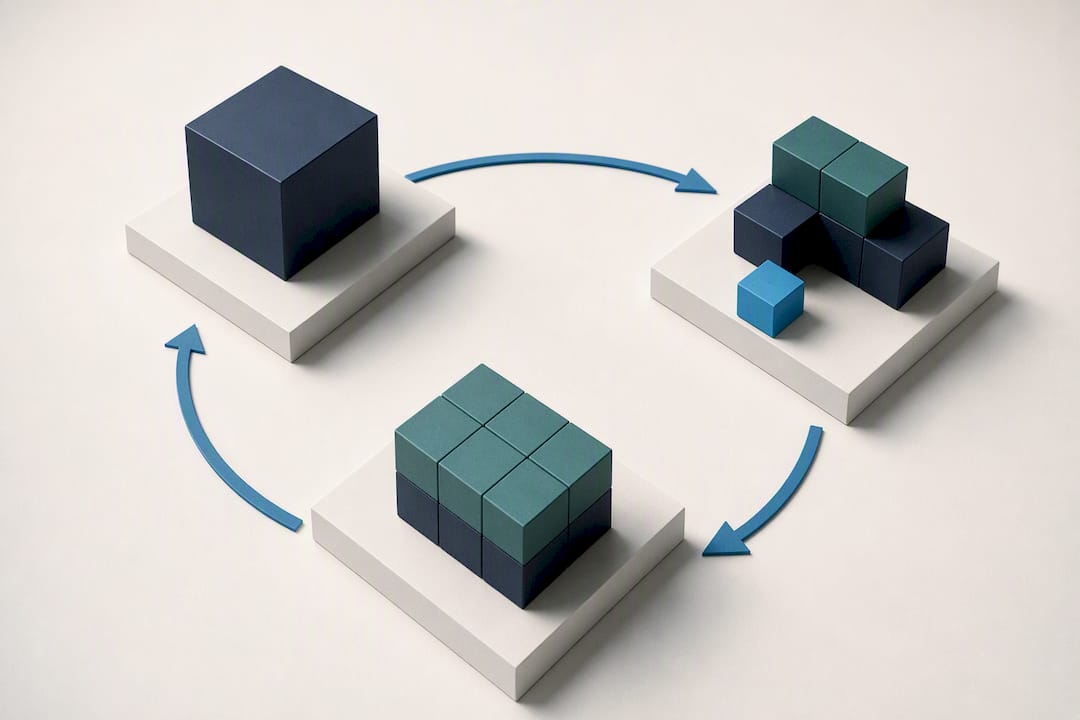
A business line of credit works more like a financial safety net you can dip into and refill. You get approved for a maximum credit limit, then draw only what you need. Interest accrues solely on the amount you’ve drawn, not the entire limit, which makes it fundamentally different from a term loan’s full-principal interest structure.
Lines of credit shine in specific situations:
- Covering payroll during a slow month while invoices are still outstanding
- Buying inventory ahead of a seasonal sales spike
- Handling an emergency repair without disrupting cash reserves
- Bridging the gap between completing a job and getting paid, common for contractors
Fees look different too. Expect a possible draw fee each time you access funds, an annual maintenance fee just to keep the line open, and sometimes an inactivity fee if you don’t use it. Rates tend to be variable and tied to a benchmark like the prime rate, so your cost can shift month to month. Lines can be secured against receivables or inventory, or unsecured for smaller limits, but qualification often leans more heavily on cash flow consistency than on the hard collateral term loans demand.
Term Loan vs Line of Credit: Side-by-Side Comparison
Here’s how the two stack up across the factors that actually change your decision:
| Factor | Term Loan | Line of Credit |
|---|---|---|
| Repayment schedule | Fixed installments, fully predictable | Flexible, tied to what you draw and repay |
| Interest structure | Fixed or variable, charged on full principal | Usually variable, charged only on used amount |
| Best uses | Equipment, real estate, one-time expansion | Payroll gaps, inventory, seasonal cash flow |
| Collateral | Often required, tied to the financed asset | Sometimes secured by receivables, or unsecured |
| Fees | Origination fee, possible prepayment penalty | Draw fees, maintenance fees, inactivity fees |
| Approval difficulty | Higher documentation, revenue history required | Often faster, but revenue consistency matters most |
| Funding speed | Days to a few weeks depending on lender | Often same day to a few days once approved |
Three quick scenarios show how this plays out. A machine shop buying a $150,000 laser cutter wants a term loan, since the asset has a known cost and a useful life measured in years. A retail store stocking up before the holiday rush wants a line of credit, since inventory needs vary and get repaid quickly once sales come in. A general contractor waiting 60 days on a client invoice wants a line of credit to cover subcontractor payments in the meantime, then repays it once the invoice clears.
Roughly half of small businesses report uneven cash flow as a real operating challenge, according to Lendio’s summary of Federal Reserve survey data. That single figure explains why lines of credit exist as a category at all: predictable expenses get term loans, unpredictable timing gets revolving credit.
How Do You Choose Between a Line of Credit and a Term Loan?
Start with two questions. First, is this a one-time expense with a fixed dollar amount, or a recurring need you can’t fully predict? Second, can your monthly revenue comfortably absorb a fixed payment, or do you need the flexibility to borrow less in slow months?
Once you know the shape of your need, bring these questions to every lender you talk to:
- What is the actual APR, including all fees, not just the advertised interest rate?
- Are there draw fees, maintenance fees, or inactivity fees on a line of credit?
- Is there a prepayment penalty if I pay off a term loan early?
- What collateral or personal guarantee is required?
- For a line of credit, does the limit renew automatically, or do I need to reapply?
- What happens to my rate if the benchmark index rises?
Watch for offer letters that bury an origination fee in the fine print, or a line of credit with a renewal clause that lets the lender cut your limit without warning.
Pro Tip: Ask for the total dollar cost of borrowing under a realistic usage scenario, not just the interest rate. A 7% line you draw fully for a year can cost more than an 8% term loan you pay down on schedule, once fees are added in.
What Does Each Option Actually Cost You?
Comparing headline rates alone hides the real cost. Build your comparison from these pieces instead:
- Origination fee, typically 1% to 6% on many term loans, charged once at funding
- Draw fees or annual maintenance fees on a line of credit, charged whether or not you use the full limit
- Prepayment penalties, more common on term loans than lines of credit
- Interest cost: full principal for a term loan versus only the drawn balance on a line
Borrow the same $50,000 as a line of credit, but only draw $15,000 for three months to cover a seasonal gap, and you pay interest on $15,000 for 90 days, plus a modest maintenance fee. The line costs far less in that scenario, even at a similar rate, because you’re not paying to carry money you never used.
Where SBA 504 Loans Fit the Term Loan Picture
An SBA 504 loan is a textbook example of the term-loan category done well: a fixed rate, a long amortization schedule, and repayment matched to the useful life of the asset you’re financing. There are programs available that help New England businesses finance commercial real estate and equipment with features such as:
- A 10% down payment structure instead of the larger amounts many conventional lenders demand
- Fixed rates locked in for up to 25 years on real estate
- Down payment assistance and a dedicated VetLoan Advantage Program for veteran-owned businesses
If you’re weighing a real estate or equipment purchase against your monthly budget, the SBA 504 loan calculator turns that comparison into real numbers in a few minutes.
The One Rule That Cuts Through Most of This Decision
If you remember one thing from everything above, make it this: match the length of your financing to the length of time the expense will benefit your business. A term loan for a 15-year piece of equipment and a line of credit for a 60-day cash gap aren’t really competing products. They’re solving different timing problems, and the businesses that get into trouble are usually the ones that financed a short-term problem with long-term debt, or tried to stretch a revolving line to cover a purchase that should have been amortized for years.
— PHENYX
Ready to Finance Your Next Equipment Purchase or Property?
If your next move is a piece of equipment, a building purchase, or refinancing existing commercial debt, Cdcnewengland’s SBA 504 program is built specifically for that job, not for bridging short-term cash gaps. Where a bank line of credit charges a variable rate that moves with the market, Cdcnewengland’s Equipment 10-Year Fixed, Real Estate 20-Year Fixed, and Real Estate 25-Year Fixed programs lock in your rate for the life of the loan and require only a 10% down payment.
Businesses refinancing existing debt can explore the SBA 504 Refinance Program, and veteran-owned businesses get dedicated terms through the VetLoan Advantage Program, which carries a 1.0% processing fee. Run your numbers on the 504 loan calculator, then reach out to a Cdcnewengland advisor to check your eligibility before you commit to any offer.
Where to Verify These Numbers
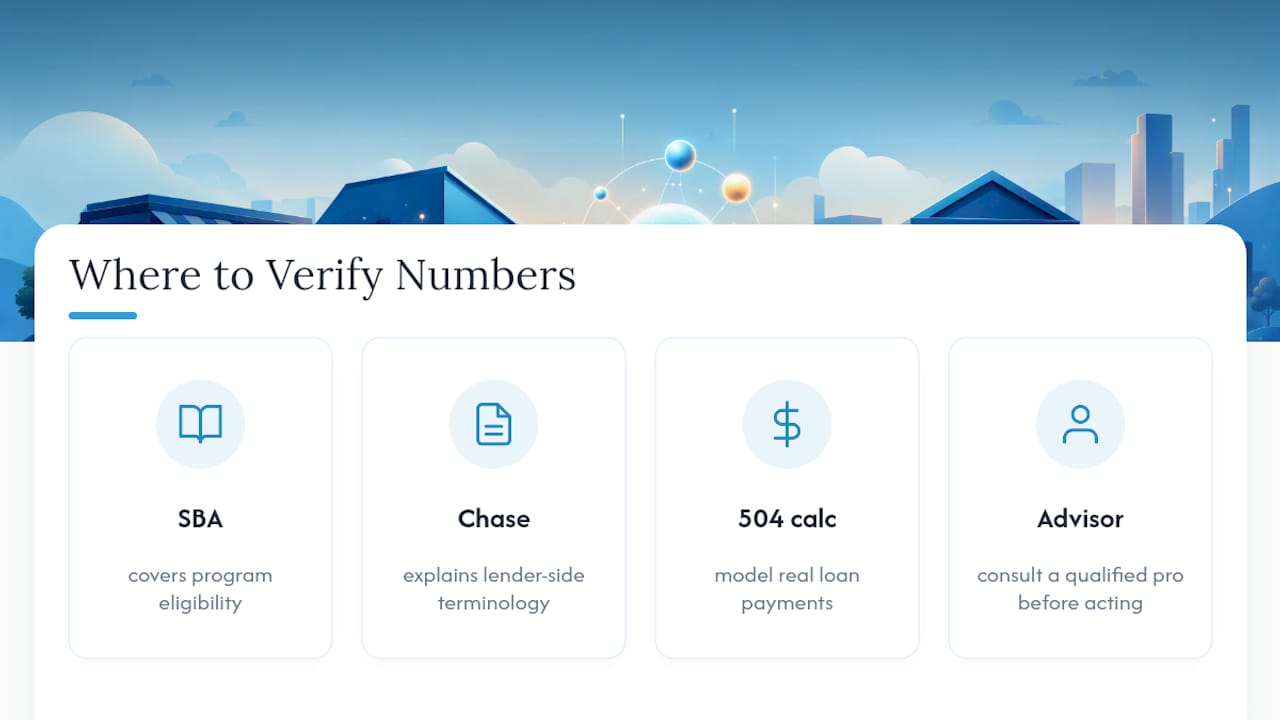
For deeper reading beyond this guide, the Small Business Administration covers program eligibility, Chase for Business breaks down lender-side terminology, and the 504 loan calculator lets you model real payments.
This article is general information, not a substitute for advice from a qualified financial advisor. Consult a qualified financial professional about your own circumstances before acting on anything here.
Sources
- U.S. Small Business Administration
- Lendio — Term loan vs line of credit
- Chase for Business — Business loan vs line of credit
FAQ
What Is the Monthly Payment on a $50,000 Line of Credit?
It depends entirely on how much of the $50,000 limit you’ve actually drawn, since interest accrues only on the used balance, not the full line. If you draw $20,000 at a variable rate around 8% to 10%, expect interest costs in the range of $130 to $170 per month on that balance alone, plus any minimum payment your lender requires toward principal.
Is There a Downside to a Line of Credit?
Yes. Variable rates mean your cost can rise without warning, and maintenance or inactivity fees can quietly eat into savings if you rarely draw the funds. Lines of credit also tend to carry lower limits than term loans, so they’re a poor fit for large, one-time purchases like real estate or major equipment.
How Does a $10,000 Line of Credit Work?
You’re approved for a revolving line of credit, and you draw only what you need for expenses like a short inventory buy or an unexpected repair. Interest applies only to the drawn amount, and once you repay it, that credit becomes available to draw again, unlike a term loan’s one-time disbursement.
How Is a $50,000 Home Equity Loan Different From a $50,000 Home Equity Line of Credit?
A home equity loan disburses the full $50,000 upfront with fixed payments over a set term, similar in structure to a business term loan. A home equity line of credit lets you draw against that $50,000 limit as needed, paying interest only on what you’ve used, which mirrors how a business line of credit functions.