If you own commercial property and your loan is approaching maturity, your main refinance routes fall into five lanes: SBA 504 or 7(a), conventional bank and life-company loans, agency programs through Freddie Mac and Fannie Mae, CMBS execution, and bridge or cash-out financing. For most qualifying small-business owners seeking a long-term fixed rate and a lower down payment, SBA 504 deserves first consideration. Start evaluating your options 12 to 24 months before your loan matures.
TL;DR:
- Begin lender conversations 12 to 24 months before maturity, approach multiple channels in parallel, and compare fees, prepayment penalties, and closing time alongside rates.
- Conventional and agency lenders often seek DSCR above 1.25x and LTV of 65% to 75%; agency programs serve multifamily, not general commercial properties.
- SBA 504 offers 10, 20, or 25 year repayment terms, but refinancing requires eligible debt and majority business occupancy; working capital is excluded.
- Bridge loans cover urgent maturities or unstabilized properties, but borrowers face higher rates, fees, possible recourse, and must document a clear exit plan.
Table of Contents
- At-a-glance: what each refinance option is and who it’s best for
- SBA 504 refinance explained: eligibility, terms, and practical borrower benefits
- How conventional and agency lenders evaluate refinance deals
- Cash-out and bridge options: choosing speed and liquidity over long-term certainty
- Decision framework: how to choose the right refinance option and what to ask lenders
- Detailed overview of the Down Payment Assistance Program in refinance scenarios
- Publisher perspective: our view on refinance strategy and when SBA 504 makes sense
- How we can help with your refinance
- FAQ
- Sources
- Authoritative program and regulatory pages referenced in this article
At-a-glance: what each refinance option is and who it’s best for
Each refinance lane serves a different borrower profile and a different goal. Matching your asset type, timeline, and risk tolerance to the right lane before you start shopping rates saves weeks of wasted conversations.
Conventional bank and life-company loans remain the default for stabilized, owner-occupied, or investment commercial properties with strong cash flow. Banks tend to offer flexibility on loan size and property type but shorter amortization schedules, often 20 to 25 years with a call or reset at 5, 7, or 10 years. Life companies generally want larger, lower-leverage deals on well-located assets and reward that profile with longer-term fixed rates and non-recourse structures. Both channels lean on relationship underwriting, so a borrower with an existing banking relationship and clean financials usually moves faster here than through agency or CMBS channels.
Agency multifamily routes through Freddie Mac and Fannie Mae apply specifically to multifamily and some mixed-use properties, not general commercial real estate. Fannie Mae requires its servicers to evaluate a loan’s refinance prospects starting at least 24 months before maturity, using cap rate, debt service coverage ratio, and net cash flow from recent financial statements to classify the loan as meeting or not meeting refinance criteria, as outlined in the Fannie Mae multifamily guide. Freddie Mac’s Optigo fixed-rate program offers a parallel path, with defined minimum loan sizes and refinance test thresholds that can waive certain requirements when debt coverage and leverage are strong enough.
CMBS refinancing suits borrowers with larger, stabilized assets who want non-recourse leverage and are comfortable with a longer closing process and more rigid loan documents. It typically delivers competitive pricing on bigger loans but comes with less flexibility once the loan is securitized, including defeasance provisions that make early payoff expensive.
Bridge loans and cash-out refinancing solve a different problem: speed and liquidity rather than long-term rate certainty. These options work when a maturity date is approaching faster than a permanent loan can close, or when an owner needs to pull equity out for a new acquisition or capital improvement.
SBA 7(a) loans can also refinance certain commercial debt, particularly when a business needs to combine real estate refinancing with working capital or equipment needs in a single loan, though eligibility and use-of-proceeds rules are narrower than SBA 504’s.
A quick summary of who fits where:
- Conventional/life company: stabilized properties, existing banking relationships, moderate leverage needs.
- Agency (Freddie Mac/Fannie Mae): multifamily assets with strong occupancy and cash flow history.
- CMBS: larger stabilized assets where non-recourse leverage matters more than flexibility.
- Bridge/cash-out: time-sensitive situations, value-add properties, or equity extraction needs.
- SBA 504/7(a): owner-occupied small business real estate or equipment, especially when a low down payment and fixed long-term rate matter most.
SBA 504 refinance explained: eligibility, terms, and practical borrower benefits
SBA 504 refinancing lets qualifying small-business owners replace existing commercial real estate or equipment debt with a long-term, fixed-rate loan. The program’s repayment terms run 10, 20, or 25 years, with interest rates pegged to an increment above the current market rate for 10-year U.S. Treasury issues, and certain fees can be financed into the loan rather than paid out of pocket at closing.
Not every debt qualifies. Under 13 CFR 120.882, the regulation defines “qualified debt” and lays out the conditions under which SBA 504 can be used to refinance existing obligations. Working capital, inventory financing, and debt that fails the qualified debt test are excluded from eligibility.
The program recently got more flexible. In September 2024, the SBA finalized a direct final rule that streamlines 504 debt refinancing, effective November 15, 2024. The rule expanded eligibility for refinancing with and without business expansion and removed the prior requirement to demonstrate a minimum payment reduction in some cases, an opening for owners who previously might not have qualified to access longer-term, fixed-rate debt.
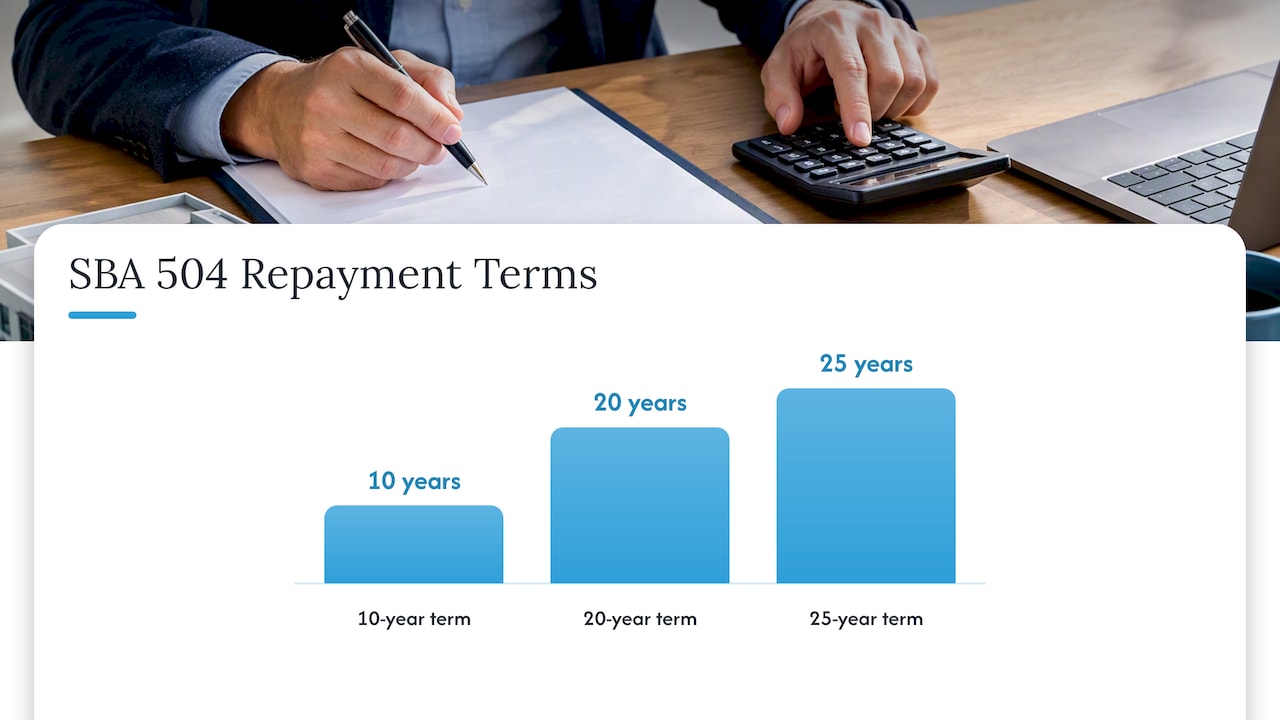
For many small-business property owners, the practical draw of SBA 504 refinancing comes down to three things: a fixed rate locked for up to 25 years, a lower down payment requirement than most conventional alternatives, and the option to combine refinancing with debt consolidation in a single transaction. Veteran-owned businesses and spouses of veterans may also find targeted incentive programs worth exploring, and some borrowers can pair refinancing with down payment assistance where they qualify, though specific terms vary by program and lender.
Before applying, borrowers should prepare:
- Recent business tax returns and financial statements, typically the last two to three years.
- A current debt schedule showing the loan being refinanced and its original terms.
- Documentation proving owner-occupancy, since 504 eligibility generally requires the business to occupy a majority of the property.
- Appraisal and title information on the property securing the loan.
How conventional and agency lenders evaluate refinance deals
Underwriting is where refinance plans succeed or stall. Lenders outside the SBA system lean heavily on a handful of recurring metrics, and knowing them ahead of time changes how you prepare.
- Debt service coverage ratio (DSCR) and loan-to-value (LTV) drive approval. Most conventional and agency lenders want a DSCR comfortably above 1.25x and LTV in the 65% to 75% range, though specific thresholds vary by lender and property type. Freddie Mac’s Optigo program, for example, can waive certain refinance test requirements when DSCR reaches 1.40x and LTV stays at or below 60% in qualifying scenarios.
- Agency servicers run formal refinance evaluations well before maturity. Fannie Mae requires its servicers to assess a loan’s refinance prospects starting at least 24 months before the maturity date, reviewing cap rate, DSCR, and recent net cash flow to classify the loan as “Meets Criteria” or “Does Not Meet Criteria,” according to the Fannie Mae multifamily guide. A loan that doesn’t meet criteria triggers further review and payoff planning, which is exactly why early outreach matters.
- Prepayment penalties can erase refinance savings. Conventional permanent loans and agency debt often carry yield maintenance or defeasance provisions, prepayment structures that calculate a penalty based on the difference between the loan’s rate and current market rates. These provisions materially affect refinance economics and should be quantified before you commit to a refinance timeline.
- Documentation requirements are extensive and time-sensitive. Expect to produce a current rent roll, two to three years of operating statements, recent tax returns, and a lease abstract for major tenants. Agency and CMBS lenders in particular move slowly if any of these exhibits are outdated or incomplete.
For sponsors assembling a DSCR package, Brookmont Capital Ventures publishes practical guidance on calculating and presenting DSCR the way lenders expect to see it, which can shorten the back-and-forth during underwriting.
Cash-out and bridge options: choosing speed and liquidity over long-term certainty
Cash-out refinancing replaces your existing loan with a larger one and distributes the difference to you in cash, typically at a slightly higher rate than a rate-and-term refinance. A bridge loan is a short-term loan, usually 6 to 36 months, used to cover a gap, whether that’s an approaching maturity date, a property in lease-up, or an acquisition that needs to close before permanent financing is in place. Construction-to-permanent loans serve a related but distinct purpose: funding a build-out, then converting to permanent debt once the property stabilizes.
These tools make sense when timing pressure outweighs rate sensitivity: a balloon payment due in 90 days, an off-market acquisition opportunity, or a property not yet stabilized enough for agency or conventional underwriting. The tradeoff is cost. Bridge loans typically carry higher spreads, origination points, and sometimes recourse requirements that permanent financing avoids, and lenders will expect clear collateral value to offset the added risk.
To improve your odds of fast approval:
- Have a current appraisal or broker opinion of value ready before you approach lenders.
- Document your exit strategy clearly, whether that’s a sale, lease-up, or permanent refinance.
- Keep your entity paperwork and personal financial statements current, since bridge lenders move quickly and expect borrowers to match that pace.
Pro Tip: Ask any bridge lender for their typical time-to-close on a comparable deal before you sign a term sheet, not after.
Decision framework: how to choose the right refinance option and what to ask lenders
Choosing the right lane starts with naming your actual goal. Are you trying to lower your monthly payment, pull out equity, lock in rate certainty for the long term, or just close fast because a maturity date is bearing down on you? Each goal points toward a different lender channel.
- Define your primary objective before contacting any lender: payment reduction, cash-out, rate certainty, or speed.
- Match your property and borrower profile to the lanes outlined above: owner-occupied small business real estate points toward SBA 504, stabilized multifamily points toward agency programs, and time pressure points toward bridge financing.
- Contact multiple lender types in parallel, not sequentially, so you’re comparing real quotes rather than theoretical ones.
- Compare total execution cost, not just the headline rate, including fees, prepayment penalties on your current loan, and closing timeline.
When you talk to lenders, ask the same questions across every conversation:
- What term and amortization schedule can you offer, and is there a rate reset?
- What prepayment or recourse provisions apply to this loan?
- What are all the fees, including origination, appraisal, legal, and third-party reports?
- What’s your realistic time to close, based on a deal similar to mine?
Have this documentation ready before your first call: the last two to three years of operating statements, a current rent roll, copies of major leases, entity formation documents, and a debt schedule showing your existing loan terms. Start this process 12 to 24 months before your loan matures, and run conversations with multiple lender types at once rather than waiting to see how one offer looks before approaching another.
Detailed overview of the Down Payment Assistance Program in refinance scenarios
Down payment requirements are often the single biggest obstacle for small-business owners refinancing into a long-term fixed-rate loan, particularly when a property has appreciated less than the balance owed or when working capital is tight. A Down Payment Assistance Program addresses this gap directly, helping qualifying borrowers reduce the cash they need to bring to closing on an SBA 504 refinance.

Availability depends on your specific financial profile, the property type, and how the refinance is structured, so eligibility is evaluated case by case rather than guaranteed to every applicant. In practice, this type of assistance pairs most naturally with SBA 504 refinancing because the 504 structure already allows for a lower down payment than many conventional alternatives, and assistance programs can reduce that requirement further for qualifying borrowers.
Applying typically starts with the same documentation you’d prepare for any SBA 504 refinance: recent financial statements, a current debt schedule, and property information. From there, a lender who offers down payment assistance can evaluate whether your specific deal qualifies and what the assistance structure looks like for your transaction. Because terms and qualification criteria vary, the most reliable next step is a direct conversation with a lender who originates both the refinance and the assistance program, so the two can be underwritten together rather than as separate applications.
Publisher perspective: our view on refinance strategy and when SBA 504 makes sense
We’ve spent more than 70 years financing commercial property across New England, and the pattern we see most often is owners waiting too long to start. SBA 504 refinancing fits best for owner-occupied small businesses that want a fixed rate locked for decades rather than a reset in five years. We’ve put more than $2.3 billion into regional businesses, and the borrowers who get the best outcomes are the ones who bring complete documentation early and compare their 504 option against conventional financing side by side before committing.
— PHENYX
How we can help with your refinance
We offer a SBA 504 Refinance Program built for small-business owners who want a fixed rate and a lower down payment instead of a short-term reset. Alongside refinancing, we offer Real Estate 20-Year Fixed and Real Estate 25-Year Fixed terms, a program for veterans, and down payment assistance for qualifying borrowers.
- An initial consult walks through your current loan, your property’s financials, and which program fits your timeline.
- We help assemble the documentation agency and SBA underwriters expect, so your application moves without delays.
- Most borrowers start this conversation 12 to 24 months before their loan matures, giving us room to compare structures properly.
Visit our refinance program page to start the conversation, or reach out directly to find out which option fits your property and your timeline.
This article is general information, not a substitute for advice from a qualified financial advisor. Consult a qualified financial professional about your own circumstances before acting on anything here.
FAQ
What are the best options for refinancing my commercial mortgage?
The best options depend on your property type and goals: SBA 504 for owner-occupied small business real estate seeking a long-term fixed rate, agency programs (Freddie Mac, Fannie Mae) for stabilized multifamily assets, and conventional bank or life-company loans for other stabilized commercial properties. Bridge loans or cash-out refinancing fit situations where speed or liquidity matters more than long-term rate certainty.
Do LLCs get better commercial mortgage rates?
Entity structure itself doesn’t automatically produce a better rate. Lenders price loans based on the property’s cash flow, DSCR, LTV, and the borrower’s overall financial profile, whether the borrower is an LLC, corporation, or individual, so the entity type mainly affects liability and documentation rather than pricing.
What are the main types of commercial mortgages available?
Common types include SBA 504 and SBA 7(a) loans, conventional bank loans, life-company loans, agency multifamily loans through Freddie Mac and Fannie Mae, CMBS loans, and bridge loans. Each serves a different property type, loan size, and borrower timeline.
What documents do I need to prepare for a commercial refinance?
Most lenders want two to three years of business tax returns and financial statements, a current rent roll if the property is leased, a debt schedule for existing loans, and entity formation documents. Agency and SBA lenders may also require a recent appraisal and proof of occupancy for owner-occupied properties.
Sources
- 504 loans | U.S. Small Business Administration
- 13 CFR § 120.882 — Refinancing and requirements (Cornell Legal Information Institute)
- Fannie Mae multifamily guide — Refinance eligibility (excerpt)
- Optigo fixed-rate loans (Freddie Mac product document)