

Asset-based lending is a collateral-driven revolving credit facility that converts inventory, accounts receivable, and equipment into usable working capital. For manufacturers, it fits best during seasonal builds, long production cycles, or contract ramp-ups when cash gets tied up before payment arrives. If you’re considering it, start by pulling your AR aging and inventory reports, running a quick borrowing-base estimate, and speaking with a lender about your options.
TL;DR:
- Asset-based lending relies on the current value of collateral like inventory and receivables, not on earnings or projected income.
- Borrowing capacity depends on eligible collateral value times an advance rate, which varies based on collateral type and liquidation value.
- Tariffs and slow-moving stock can lower borrowing limits because lenders price collateral on net liquidation value and require SKU-level origin documentation.
- Manufacturers use ABL mainly for seasonal builds, contract ramp-ups, prepayment needs, and to preserve long-term debt capacity for equipment and real estate.
- Successful ABL management requires rigorous and timely reporting of collateral, as lender oversight can include field exams, cash-control measures, and concentration limits.
Table of Contents
- What Is Asset-Based Lending, and How Does It Differ From Cash-Flow Loans
- How ABL Works for Manufacturers: Collateral, Borrowing Base, and Advance Rates
- Benefits and Common Use Cases of ABL for Manufacturers
- Key Risks and Lender Controls Manufacturers Must Expect
- How to Prepare and Apply for an ABL Facility
- Where ABL Fits With SBA Financing and CDC New England’s Role
- What the Borrowing Base Really Tests
- How CDC New England Supports Manufacturers Building a Full Financing Stack
- Sources
- FAQ
What Is Asset-Based Lending, and How Does It Differ From Cash-Flow Loans
Asset-based lending (ABL) ties borrowing capacity to the value of specific collateral rather than to your company’s earnings history. A cash-flow loan looks at EBITDA and projected income; ABL looks at what your balance sheet actually holds today, according to the Comptroller’s Handbook on asset-based lending, which frames ABL as collateral-driven credit governed by a borrowing-base formula and regular lender oversight.
Manufacturers typically encounter three facility structures:
- Revolving ABL: draws and repays against a borrowing base of AR and inventory, ideal for day-to-day working capital swings.
- Floor-plan financing: common when equipment or finished goods sit with a dealer before sale, with the lender monitoring units through trust receipts and periodic curtailments.
- Term ABL: a fixed-draw facility secured by equipment, useful when a single capital need doesn’t fit a revolving structure.
Manufacturers often prefer ABL because production cycles and receivable terms create timing gaps between paying suppliers and collecting from customers. A revolver bridges that gap without touching long-term debt capacity.
How ABL Works for Manufacturers: Collateral, Borrowing Base, and Advance Rates
Lenders generally accept finished goods inventory, raw materials, and trade receivables as eligible collateral, with equipment sometimes added for a blended facility. Work-in-process inventory, consigned goods, and tariff-exposed SKUs are common exclusions or get reduced advance rates because they’re harder to value and liquidate quickly.
The borrowing-base formula is straightforward: eligible collateral value multiplied by an advance rate equals available credit. Lenders recalculate this regularly, often through weekly or monthly borrowing-base certificates that report current AR aging, inventory counts, and any ineligible items.
- Advance rates on receivables commonly run higher than on inventory, since receivables convert to cash faster.
- Inventory advance rates depend on net orderly liquidation value (NOLV), which is the estimated cash a lender expects from a controlled sale, not book value.
- Slow-moving or tariff-affected inventory typically pulls a lower NOLV and a corresponding haircut.
Tariff-driven cost inflation can compress how much a manufacturer can borrow, because lenders price collateral on NOLV rather than book value, and many now require SKU-level country-of-origin tracking before setting advance rates on imported inputs. That single shift has reshaped how manufacturers document inventory for renewal.
Benefits and Common Use Cases of ABL for Manufacturers
ABL earns its place in a manufacturer’s capital stack when working capital needs are recurring and collateral-rich rather than one-time and speculative.
- Seasonal production builds: a facility ramps up inventory financing ahead of peak demand, then draws down as receivables convert to cash.
- Contract ramp-ups: new customer contracts often require upfront material purchases before the first invoice is paid, and a revolver covers that gap.
- Purchase-order and supplier prepayment support: larger orders sometimes require deposits to suppliers, which a borrowing base can fund against existing receivables.
- Accordion features: many ABL facilities include a built-in option to expand the credit line as the collateral base grows, without renegotiating the entire agreement.
Used well, ABL preserves your long-term debt capacity for equipment or real estate, since the revolver handles short-term swings while term financing stays reserved for capital expenditures. A manufacturer ramping up for a multi-year contract, for instance, can fund the material buildup through the revolver instead of drawing down cash reserves meant for a new production line.
Key Risks and Lender Controls Manufacturers Must Expect
ABL comes with more oversight than a traditional term loan, and manufacturers should plan for that from day one. Lenders monitor collateral closely because their advance decisions depend on current, accurate reporting.
- Field exams verify inventory counts and receivable aging against what’s reported on borrowing-base certificates.
- Cash-control provisions, sometimes called lockbox arrangements, route customer payments through the lender before they reach your operating account.
- Concentration limits reduce advance rates when a single customer represents a large share of receivables. The OCC’s guidance flags customer concentration above roughly 10% of the receivables pool as a common trigger for tighter terms.
- Curtailments require periodic principal reductions on inventory that’s aged past a set threshold, a practice detailed in the Comptroller’s Handbook on floor-plan lending.
Tariff exposure and slow-moving stock compound these controls, since lenders often add reserves against SKUs they consider harder to liquidate at full value.
Pro Tip: Submit borrowing-base certificates on a consistent schedule, even between required dates, so you catch a covenant problem before your lender does.
How to Prepare and Apply for an ABL Facility
Getting to a closed facility takes preparation, and the timeline moves faster when your documentation is ready before the first conversation with a lender.
- Assemble your documents: AR aging reports, inventory listings by SKU and location, equipment schedules, insurance certificates, and existing UCC filings.
- Expect a phased timeline: an indicative term sheet typically comes first, followed by field-exam diligence, then closing, a process that commonly spans several weeks depending on collateral complexity.
- Budget for fees: expect origination fees, field-exam costs, and ongoing monitoring fees on top of the interest rate itself.
- Negotiate the terms that matter most: advance rates on each collateral category, how “eligible inventory” gets defined, the frequency of field exams, whether an accordion feature is included, and how your lender’s position stacks against any other secured creditor.
Pro Tip: Push for a clear, written definition of ineligible inventory before signing. Vague eligibility language is where borrowing-base disputes usually start.
Reviewing a general primer on borrowing-base mechanics alongside your lender’s specific term sheet helps you spot unusual terms before you agree to them.
Where ABL Fits With SBA Financing and CDC New England’s Role
ABL handles short-term working capital, but manufacturers often need long-term financing running alongside it. The SBA’s 7(a) Manufacturers’ Access to Revolving Credit (MARC) program, launched in September 2025, offers flexible working-capital lines up to $5 million and can complement a private ABL revolver or sit alongside SBA 504 term debt.
Certain lenders focus on the fixed-rate side of that stack:
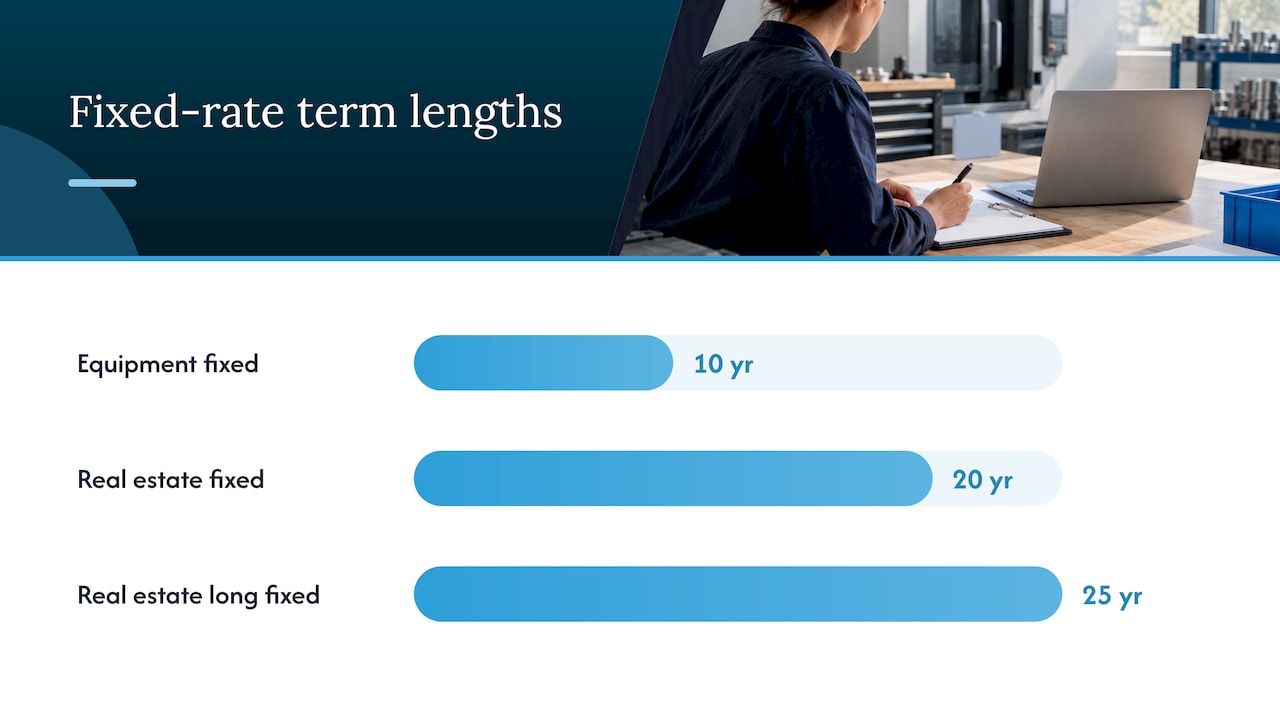
- Equipment 10-Year Fixed and Real Estate 20-Year Fixed and 25-Year Fixed programs lock in long-term rates for capital equipment or property.
- SBA 504 Refinance Programs help manufacturers restructure existing term debt.
- Programs like VetLoan Advantage and Down Payment Assistance address specific ownership situations, including veteran-owned businesses and lower upfront capital.
A manufacturer buying a new production line might pair a 504 loan for the equipment with an ABL revolver to keep inventory financing flexible, using fixed-rate term debt for the asset and a revolving line for the cash cycle around it.
What the Borrowing Base Really Tests
The most overlooked part of asset-based lending isn’t the interest rate. It’s whether a manufacturer treats the borrowing base as something to manage actively or something to report passively. Lenders adjust advance rates based on what they see in your certificates and field exams, and a business that submits clean, current data every cycle tends to keep more availability than one that scrambles at renewal.
Conventional advice tends to focus on shopping for the lowest advance-rate spread, but that misses the bigger lever: inventory and receivable hygiene. A manufacturer with tight AR aging and well-documented SKU origins, especially on tariff-exposed inputs, will often negotiate better terms than one chasing a marginally lower rate with messy books.
If you’re evaluating ABL for the first time, prioritize your reporting discipline before you negotiate pricing. The rate matters less than your ability to keep availability stable when tariffs shift or a customer’s order slows down.
— PHENYX
How CDC New England Supports Manufacturers Building a Full Financing Stack
Manufacturers rarely solve their capital needs with one loan type. If you’re financing new equipment or a facility expansion while also managing working capital through an ABL revolver, CDC New England’s SBA 504 programs are built for the term side of that equation, with a 10% down payment requirement and fixed rates for up to 25 years.
An initial conversation usually covers your eligibility, the documents you’ll need, and a realistic timeline for your project, whether that’s equipment financing, a real estate purchase, or refinancing existing debt through the SBA 504 Refinance Program. Veterans and their spouses can also ask about the VetLoan Advantage Program. If a lower upfront cost matters most, the Down Payment Assistance Program is worth raising early.
Visit CDC New England to check your eligibility and start a conversation about your project.
Sources
- Asset-based lending (Comptroller’s Handbook)
- When the tariff bill lands in the borrowing base: ABL mechanics under import-cost inflation — ABF Journal
- SBA launches first-ever loan program dedicated to American manufacturers
FAQ
What does ABL stand for?
ABL stands for asset-based lending, a financing structure where borrowing capacity is tied to the value of pledged collateral such as inventory, accounts receivable, or equipment. It differs from cash-flow lending, which bases credit on earnings rather than balance-sheet assets.
How is the borrowing base calculated for manufacturers?
The borrowing base is calculated by applying an advance rate to each category of eligible collateral, such as receivables and inventory, then subtracting any reserves the lender requires. Lenders recalculate this regularly using borrowing-base certificates, and the OCC’s asset-based lending handbook outlines the standard formula and monitoring cadence.
How do tariffs affect ABL availability for manufacturers?
Tariffs raise the cost of imported inputs, which can lower the net orderly liquidation value lenders assign to affected inventory and reduce advance rates. Many lenders now require SKU-level country-of-origin documentation before setting rates on tariff-exposed goods.
Can ABL be combined with SBA loan programs?
Yes. A short-term ABL revolver can run alongside SBA term financing, such as SBA 504 loans for equipment or real estate, letting a manufacturer use fixed-rate term debt for capital purchases while the revolver manages working capital. The SBA’s MARC program was also introduced specifically to give small manufacturers a flexible working-capital option that can complement other financing.
What documents does a manufacturer need to apply for ABL?
Manufacturers typically need AR aging reports, inventory listings by SKU and location, equipment schedules, insurance certificates, and existing UCC filings. Having these ready before the first lender conversation shortens the diligence and field-exam phases of the process.


