

A term sheet is generally a non-binding outline of proposed loan terms used to guide negotiations, while a commitment letter is the lender’s formal, typically binding promise to fund a deal once specific conditions are met. That difference matters because a term sheet tells you what a lender might offer, but a commitment letter tells you what a lender has actually agreed to fund, subject to underwriting conditions being satisfied.
TL;DR:
- A term sheet generally remains non-binding and outlines negotiable loan terms, while a commitment letter is a binding promise contingent on satisfaction of specified conditions.
- Term sheets are issued early in negotiations and avoid detailed closing requirements, whereas commitment letters arrive after underwriting, detailing specific closing conditions and fees.
- Courts are more likely to enforce a commitment letter than a term sheet, especially if the latter contains definitive pricing or signature lines.
- Paying fees or deposits with a commitment letter can create legal obligations, so clarity around these costs is crucial before signing.
- Confirm that the final loan documents will replace the commitment letter at closing to avoid ongoing expense or obligation issues.
Table of Contents
- What a term sheet is and what it normally contains
- What a commitment letter is and what it normally contains
- Side-by-side comparison: the key differences borrowers should know
- Legal enforceability and common drafting pitfalls
- Typical timeline and next steps after each document
- Negotiator’s checklist: what to confirm or negotiate before signing
- Publisher perspective: how CDC New England advises borrowers
- How CDC New England can help
- Sources
- FAQ
What a term sheet is and what it normally contains
A term sheet is a preliminary “heads of terms” document that lenders and borrowers use early in a financing discussion to outline proposed conditions before anyone commits to anything final. You’ll usually see phrases like “subject to” or “for discussion purposes only” scattered through the document, and those words exist on purpose: they signal that the parties intend the terms to remain negotiable rather than fixed.
Most term sheets, whether for a commercial real estate loan or an equipment purchase, cover the same core categories:
- Loan amount, interest rate or margin, and repayment term.
- Amortization schedule and prepayment provisions.
- Financial covenants and collateral requirements.
- Conditions that must be satisfied before underwriting proceeds.
Term sheets play a practical role beyond outlining numbers. They give a borrower’s internal decision makers something concrete to approve, they give counsel a drafting roadmap for the definitive loan documents, and they establish a shared starting point for negotiation. Because a term sheet is not usually the final word, many borrowers wait to bring in legal counsel until the commercial terms firm up, though lawyers who work in banking finance often recommend earlier review when the deal involves complex covenants or multiple lenders.
What a commitment letter is and what it normally contains
A commitment letter is a written commitment from a lender to provide financing, issued after the lender has completed underwriting and received internal credit approval. Unlike a term sheet, it represents a lender’s considered decision to extend credit, and it typically carries binding weight once both parties sign, subject to the conditions precedent spelled out inside it.
The contents tend to be more detailed and more consequential than what appears in a term sheet:
- Specific closing conditions, such as appraisal, title, and insurance requirements.
- A no material adverse change clause protecting the lender if the borrower’s financial condition worsens before closing.
- Expense reimbursement obligations covering the lender’s out-of-pocket costs.
- A commitment fee or good faith deposit, along with accept-by and expiration dates.
- Confidentiality and, in some cases, exclusivity provisions.
In acquisition financing, a debt commitment letter often functions as proof of funds. Sellers in an M&A transaction frequently insist on seeing a signed commitment letter before agreeing to a purchase price, because it demonstrates the buyer’s financing is more than a hopeful projection.
Side-by-side comparison: the key differences borrowers should know
The two documents differ across several practical dimensions that shape how you should treat each one.
- Binding status: term sheets are usually non-binding statements of intent, while commitment letters are binding commitments subject to stated conditions.
- Timing in the deal: a term sheet appears early, often before formal underwriting begins, while a commitment letter arrives near the end of underwriting once credit approval is secured.
- Level of detail: term sheets summarize commercial terms in broad strokes, while commitment letters spell out closing conditions, deadlines, and fee obligations with precision.
- Fees and deposits: term sheets rarely require payment, but commitment letters commonly attach a good faith deposit or commitment fee that may be non-refundable.
- Enforceability: courts are far more likely to enforce a commitment letter’s terms than a term sheet’s, particularly when the commitment letter contains definitive conditions precedent.
- Typical use case: term sheets guide negotiation and internal approval, while commitment letters serve as proof of funding in real estate closings and acquisitions.
Watch for signals that a document is more binding than its label suggests. A term sheet that requests a fee, includes signature lines for both parties, or layers in restrictive confidentiality and no-shop language is behaving like a commitment, regardless of what the header says. When a seller demands proof of funds or the financing is closing-critical, insist on a commitment letter rather than relying on a term sheet alone.
Legal enforceability and common drafting pitfalls
Courts generally respect a document’s stated intent, but a term sheet can become enforceable if it reads like a final agreement. Definitive pricing, firm delivery dates, and the absence of “subject to contract” language can all persuade a court that the parties meant to be bound, even if the document was labeled a term sheet. Some practice guidance warns that overly detailed term sheets have created unintended enforceability in past disputes.
Commitment letters carry their own traps. Vague conditions precedent leave room for dispute about whether they were satisfied. Expense reimbursement clauses that survive termination can leave a borrower paying costs long after a deal collapses. Unclear supersession language, meaning the letter never says the final loan documents replace it, can create conflicting obligations after closing.
The fix on both sides is drafting discipline: an explicit non-binding statement in term sheets, precise and measurable conditions precedent in commitment letters, and a clause confirming that final loan documents supersede the commitment letter once signed.
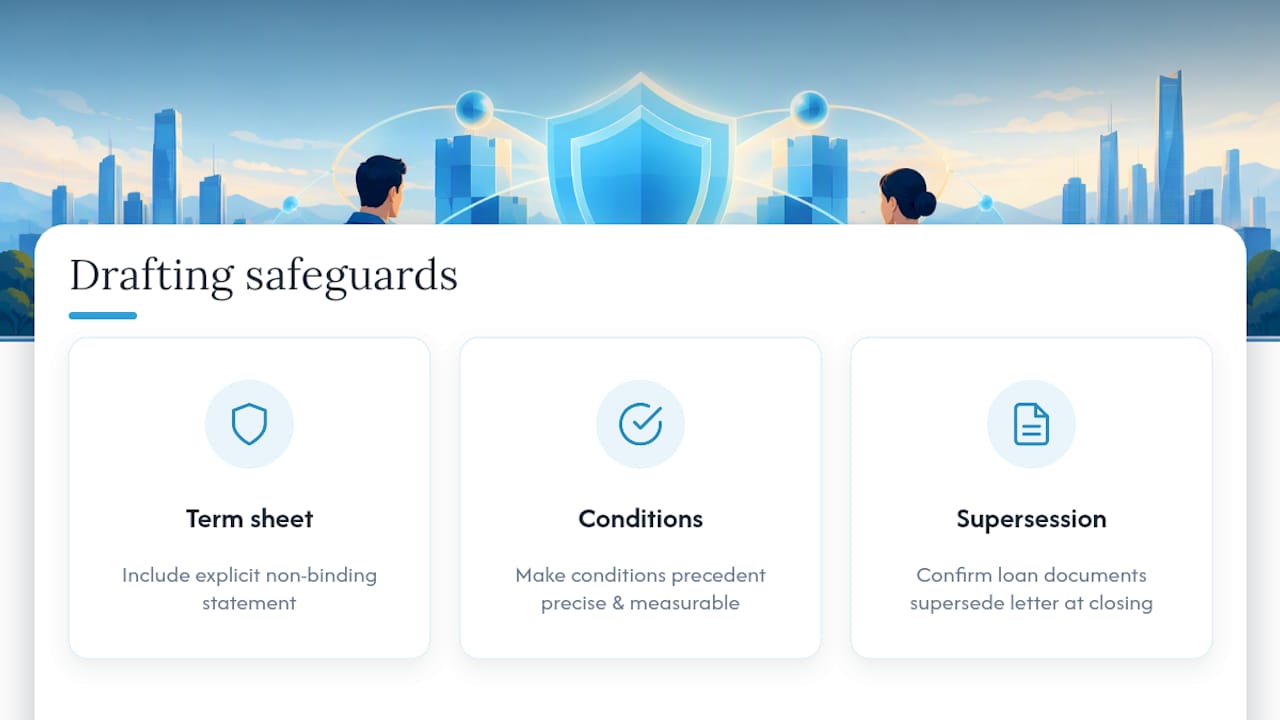
Pro Tip: Ask your lender’s counsel to confirm in writing that the loan documents will supersede the commitment letter at closing, so no reimbursement or survival clause outlives the deal itself.
Typical timeline and next steps after each document
Once you receive a term sheet, confirm your internal approvals and use the terms as a negotiating baseline rather than a finished deal. If you’re ordering third-party reports like appraisals during this stage, make sure you’re protected against paying for them if the deal falls apart, and keep “subject to” language in any exploratory diligence agreements.
Once a commitment letter arrives, the priorities shift toward execution:
- Track every condition precedent, including appraisal, title, and insurance requirements, and confirm each is satisfied before the expiration date.
- Note the accept-by and close-by deadlines closely; missing one can void the lender’s commitment entirely.
- Arrange funds for any required fees or deposits well ahead of closing.
- Prepare for final loan document signing, since the commitment letter is the bridge, not the destination.
Commitment letters typically come with a firm shelf life, so treat the accept-by date as a hard scheduling constraint rather than a suggestion.
Negotiator’s checklist: what to confirm or negotiate before signing
Before signing either document, run through a short set of checks that protect you from surprises later.
- Confirm the binding language matches your expectations: non-binding for a term sheet, binding subject to named conditions for a commitment letter.
- Verify every condition precedent is specific and measurable, not left open to interpretation.
- Identify exactly what fees, deposits, or expense reimbursements you owe, and under what circumstances they’re refundable.
- Note the accept-by and expiration dates, and build your closing schedule around them.
- Check for supersession language confirming that final loan documents replace the commitment letter, and review survival clauses for anything that outlasts closing.
- Look for no-shop or exclusivity provisions that might limit your ability to pursue other financing while the document is outstanding.
Publisher perspective: how CDC New England advises borrowers
CDC New England has spent more than 70 years helping New England businesses move through financing stages like these, having invested over $2.3 billion in regional projects. Our practical priority with borrowers is straightforward: clarify binding language before you sign anything, limit your expense exposure until conditions are firm, and confirm close-by dates early enough to plan around them. A borrower who understands the difference between a proposal and a promise negotiates from a stronger position.
— PHENYX
How CDC New England can help
If you’re weighing financing options for commercial real estate or equipment, CDC New England’s SBA 504 loan programs offer a 10% down payment requirement and fixed rates for up to 25 years, so you can move from term sheet to closing with fewer surprises along the way.
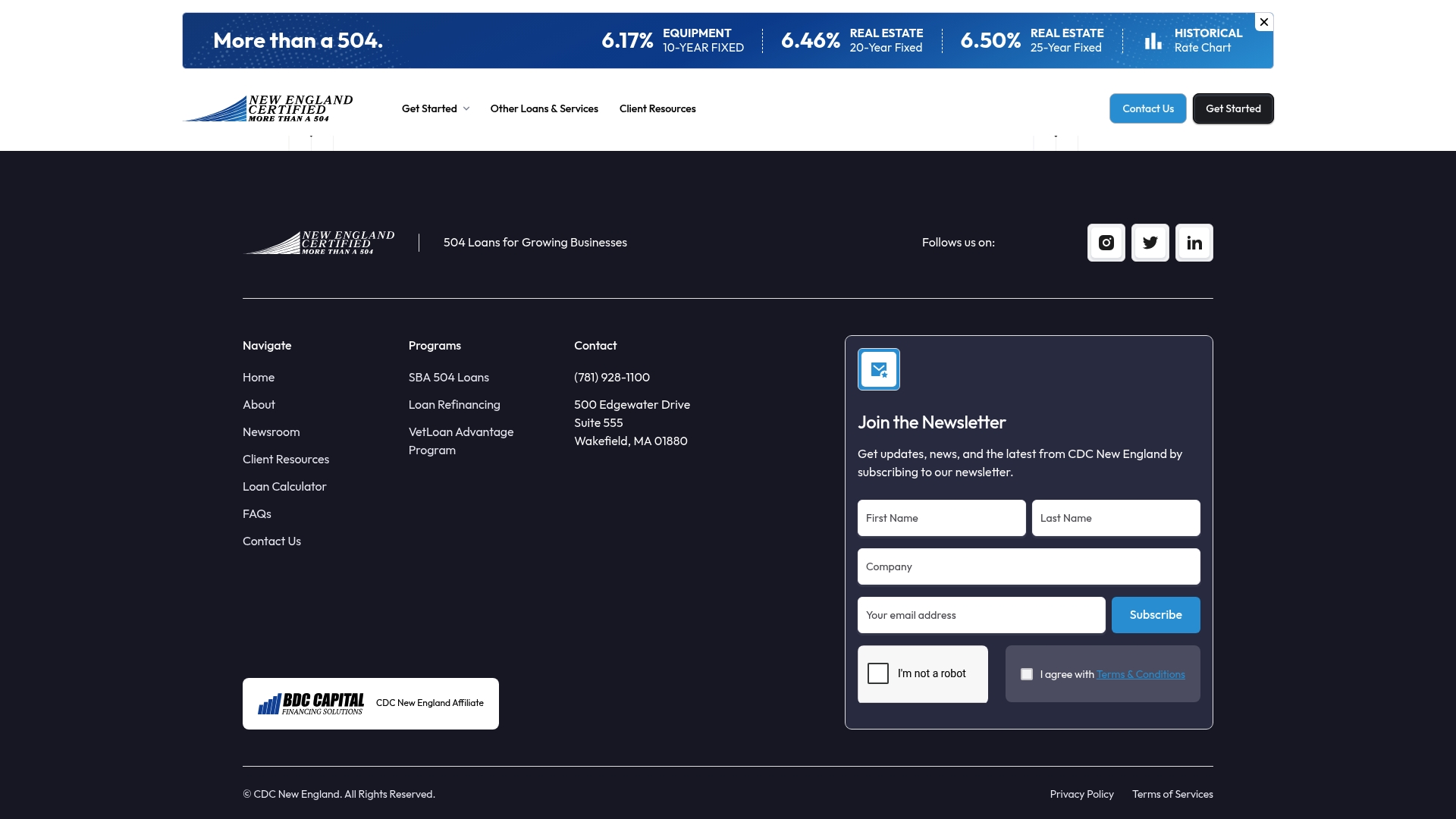
Our current fixed rates include Real Estate 25-Year Fixed at 6.77%, giving borrowers a predictable payment structure well beyond the typical commitment letter’s short shelf life.
Whether you’re refinancing existing debt through our SBA 504 Refinance Program or exploring a veteran-focused path through the VetLoan Advantage Program, our team walks you through underwriting so the commitment letter you eventually receive reflects terms you’ve already reviewed. Contact an advisor or try our SBA 504 loan calculator to see how the numbers work for your project.
FAQ
Is a term sheet a legally binding document?
A term sheet is generally non-binding, meant to outline proposed terms rather than create enforceable obligations. It can become binding, however, if it uses definitive language, omits “subject to contract” wording, or otherwise shows clear intent to be bound.
Is a term sheet the same as a letter of intent?
A term sheet and a letter of intent are often used interchangeably in practice, though the two aren’t guaranteed to carry the same legal treatment. Some jurisdictions and deal types treat them differently, so it’s worth confirming which label your document actually uses and what disclaimers it contains.
What is a commitment letter?
A commitment letter is a lender’s formal, typically binding promise to provide financing, issued after underwriting and credit approval, subject to conditions precedent like appraisal and title clearance. It often includes a good faith deposit, expense reimbursement terms, and firm accept-by and expiration dates.
What is the difference between a term sheet and an agreement?
A term sheet outlines proposed terms for future negotiation and is usually non-binding, while a definitive agreement, such as final loan documents or a purchase contract, creates enforceable obligations once signed. A commitment letter sits between the two: it’s more binding than a term sheet but still conditional until the closing conditions are satisfied.


